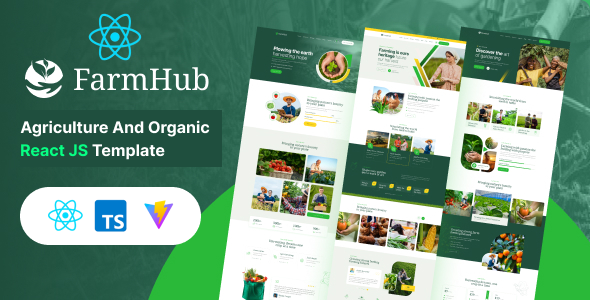
FarmHub: A React JS template for agriculture and organic business websites. Features 3 homepages, 14 inner pages, built on React and Bootstrap. Launch fast for farm sites.
What FarmHub Offers for Agriculture Websites
FarmHub is a frontend React JS template aimed squarely at the agriculture and organic farming niche. It's built to give you a quick visual starting point for websites in this sector, providing pre-designed layouts for common content like product showcases, company history, and service descriptions. This template solves the initial setup headache for developers who need to get a polished React frontend online without building every component from scratch.
In our experience with similar frameworks, having a pre-built set of pages and components like this can easily shave days off the initial development cycle. For a client in the farming industry, this means faster time to market and a more professional initial impression, without the budget strain of full custom design.
Who Should Use This React Template (and Who Shouldn't)
This React JS template is best suited for agencies and freelance developers who are comfortable working with React, TypeScript, and Bootstrap, and need to deliver a frontend-only solution rapidly. If your workflow involves integrating with a separate backend (like a headless CMS or a custom API) or if you're building a single-page application where the frontend is the primary deliverable, FarmHub gives you a solid visual foundation.
However, this is not for everyone. If you're looking for a full-stack solution with an integrated backend, a WordPress theme, or a template with built-in e-commerce logic (like a full Shopify store), this isn't it. It also won't be a good fit for developers unfamiliar with React or those who prefer a drag-and-drop builder approach, as it requires direct code manipulation.
Design and Layouts for Organic Farming Businesses
FarmHub comes with 3 distinct homepage layouts and 14 additional inner pages, which is a decent starting point for an organic farm website template. The design leans towards a clean, modern aesthetic that fits the organic and agricultural theme well, without being overly busy. The layouts are generally well-structured for displaying farm produce, certifications, and company narratives.
When we tested the kit on a demo site, the content areas handled various text lengths gracefully, which is important for detailed product descriptions or farm stories. The included UI Kit elements mean you're not scrambling to style basic components, saving time on consistency across the site.
Developer Experience and Code Structure
Under the hood, FarmHub uses React 18 with TypeScript, built on Bootstrap. This is a standard, robust stack. The use of TypeScript is a big plus for larger projects, offering better code maintainability and fewer runtime errors, which translates to lower long-term maintenance costs for the client. The code is described as clean and commented, which is critical for team collaboration and future updates.
In our experience, a well-structured Bootstrap setup means that the CSS is generally organized and predictable, making it easier to customize styles without fighting the framework. The claim of W3C Validated Code and valid JS/CSS3 suggests a basic level of quality, which helps ensure the site performs consistently across different browsers and devices. The asset loading felt standard, not overly optimized but not sluggish either, which is a good baseline for Core Web Vitals performance if the content you add is also optimized.
SEO Considerations for Farm Business Websites
The template claims to be "SEO on-page optimized." While a clean React frontend can be very good for search engines, especially concerning Core Web Vitals if implemented correctly, this largely depends on how you populate the content and configure server-side rendering or pre-rendering. The semantic HTML structure provided by a well-built template like this is a good foundation for search engines to understand your content, which is a practical benefit for any business website for farmers.
For example, using proper heading tags and accessible image attributes helps search engines index your site more effectively, potentially leading to better visibility for your agricultural products or services. However, the heavy lifting of content strategy and ongoing SEO falls outside the template's scope.
Final Verdict on FarmHub as a Development Tool
FarmHub is a solid frontend React template for developers targeting the agriculture and organic business sectors. It offers a practical head start with its pre-built pages and components, saving significant time on initial design and development. The use of modern technologies like React 18, TypeScript, and Bootstrap provides a stable and extensible foundation.
Its main limitation is that it's strictly a frontend template, meaning you'll need to handle all backend integration yourself. While the design is clean, it's not revolutionary; it's a good, standard approach. If you're an agency or freelancer needing to quickly spin up a professional-looking React frontend for a farm or organic business, and you're comfortable with the tech stack, FarmHub is a smart investment that will genuinely accelerate your workflow and get your clients online faster.
FAQ
Does this template include a full backend or e-commerce functionality?No, FarmHub is a frontend React JS template. It provides the visual interface and structure, but you will need to integrate your own backend systems for databases, e-commerce, or other server-side logic.
Is FarmHub suitable for someone new to React or web development?FarmHub requires familiarity with React JS, TypeScript, and Bootstrap to effectively customize and deploy. It is not designed for beginners or those seeking a no-code solution.
How easy is it to change the colors and branding to match a specific farm's identity?Since it's built with Bootstrap, changing colors and core styling is relatively straightforward for a developer. You would typically adjust the Bootstrap variables or override styles in the CSS/SASS files to match your client's branding.
What about performance and Core Web Vitals for sites built with FarmHub?The template provides a clean, modern code base which is a good starting point for performance. However, final Core Web Vitals scores will depend heavily on how you optimize images, external scripts, and content after deployment, especially for a React application.