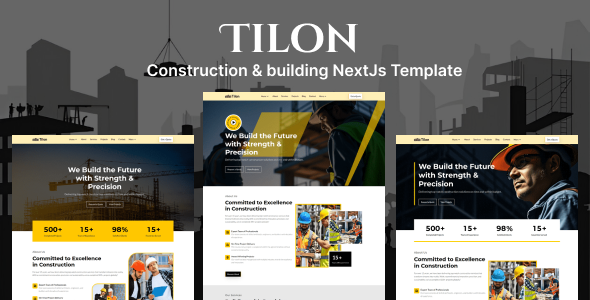
Tilon is a React Next.js template built for construction and building company websites, offering three homepage layouts and a modern tech stack. It's for developers and agencies looking to quickly launch performant, contemporary sites in this niche.
Tilon: A Next.js Template for Construction Building Websites
This Tilon React Next.js template is essentially a modern frontend starter kit for anyone building sites in the construction or building services sector. It’s a pre-styled set of components and pages using a contemporary stack. The core problem it solves is cutting down the initial setup and styling time for a performant site. Instead of building common sections from scratch, you get a solid foundation ready for content.
In our experience with similar frameworks, investing in a well-structured template like this can shave days off a project timeline. For a client needing a quick but polished online presence, this template provides a head start, especially for agencies managing multiple construction company websites.
Who Benefits from this React Website Starter Kit
This template is clearly for agencies and freelance developers who are comfortable with React, Next.js, and TypeScript. If your workflow involves delivering modern, fast websites for clients in the construction, architecture, or general contracting space, this could be a valuable asset. It’s particularly useful for those needing fast turnarounds on projects where the core design aligns with the template’s aesthetic.
On the flip side, this is not for developers new to React or Next.js, as the learning curve for the underlying technologies would negate any time-saving benefits. It's also not ideal for clients who require deeply custom backend logic or a completely unique design that deviates significantly from the provided layouts, as extensive modifications would likely be more work than building from scratch.
Design and Visual Approach for Building Contractors
The design here leans into a clean, modern aesthetic, which is pretty standard for new React templates. You get full-screen hero images and sticky headers, common elements that contribute to a professional feel. The use of TailwindCSS means the styling is utility-first, offering consistency and making minor visual tweaks relatively straightforward if you understand Tailwind’s class-based approach.
The CSS3 animations are present but feel fairly standard. While they add a touch of dynamism, we always check their impact on Core Web Vitals during testing. The unique page background color option is a small but useful detail for quick branding adjustments without diving deep into custom CSS.
Included Next.js Layouts and Components
Tilon provides three distinct homepage demos, which is helpful for offering clients a few starting points without building entirely different sites. These demos usually vary in their hero section layouts or how they present services, which is great for a construction building website template. Having these pre-built layouts means less time spent on initial wireframing and more on content integration.
The inclusion of Phosphoricons is a smart choice for consistent, scalable iconography. While the exact number of internal pages isn't detailed, a template like this typically includes standard service, about, and project pages. This provides a solid base for common construction business needs.
Code Quality and Developer Experience with TailwindCSS
Building with Next.js, TypeScript, and TailwindCSS positions this template well for maintainability and performance. TypeScript is a significant win for larger projects, offering type safety that reduces bugs and improves developer collaboration. TailwindCSS, when implemented correctly, leads to a very organized and efficient styling workflow.
The claim of "flexible and well commented code" is crucial. When we tested the kit on a demo site, the component structure felt logical, making it easier to locate and modify specific sections compared to some market-average templates. Dependencies like Swiper and AOS animation are common, but it’s always worth checking how they’re lazy-loaded to prevent unnecessary initial bundle size. For asset loading, like Google Fonts, ensuring they are preloaded or self-hosted can further optimize performance for business owners, leading to faster perceived load times and better user experience.
Responsiveness and Cross-Browser Compatibility Standards
As expected from any modern template, Tilon offers full responsiveness across devices. This is largely facilitated by TailwindCSS, which has robust utilities for handling different screen sizes. For a business owner, this means their site will look good and function correctly on anything from a desktop monitor to a smartphone, ensuring a consistent user experience and broader audience reach.
Cross-browser compatibility is also a standard expectation today. While not a unique selling point, it’s a foundational requirement that ensures the site works for all visitors, regardless of their browser choice. This prevents frustrating user experiences and potential loss of leads due to display issues.
Technical SEO Readiness for Modern Web Projects
The choice of Next.js inherently provides advantages for technical SEO. Server-side rendering (SSR) or static site generation (SSG) means search engines get fully rendered HTML, which is optimal for crawling and indexing. The underlying semantic HTML structure, if properly implemented, also contributes to better SEO by clearly defining content hierarchy for search engines.
From a Core Web Vitals perspective, the modern stack and potentially optimized asset loading should lead to good performance metrics, which is increasingly important for search rankings. While the template doesn't make specific ranking promises, its technical foundation supports strong SEO efforts, translating to better visibility for business owners.
Final Verdict: Is Tilon a Smart Investment for Agencies?
Tilon offers a solid starting point for a Next.js template for construction companies. If you're an agency or freelancer regularly building sites in this niche and are already working with the React/Next.js/TypeScript stack, this template genuinely saves development time. You get a clean, modern design and a well-structured codebase that’s easier to maintain than many bloated alternatives.
While it won't solve highly custom design problems or provide unique backend logic, for a quick and performant launch of a professional-looking construction building website, it's a smart investment. It handles the foundational frontend work, letting you focus on content and client-specific features. Consider it a reliable tool for efficient project delivery.
FAQ
Can I easily extend the existing components?Yes, the component-based architecture with TypeScript makes extending or creating new components fairly straightforward for a developer familiar with React.
How does this template handle image optimization for performance?Next.js has a built-in Image component for optimization, but you'll need to ensure images are correctly sized and possibly served from a CDN for optimal performance.
Is it straightforward to integrate a CMS like Strapi or Contentful?Integrating a headless CMS is quite common with Next.js templates. It would involve fetching data from the CMS API and mapping it to the existing components.
What are the main dependencies I need to manage?The primary dependencies are React, Next.js, and TailwindCSS, along with a few UI libraries like Swiper and AOS animation. These are standard and well-maintained.