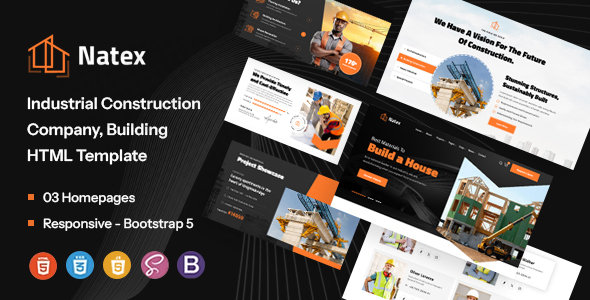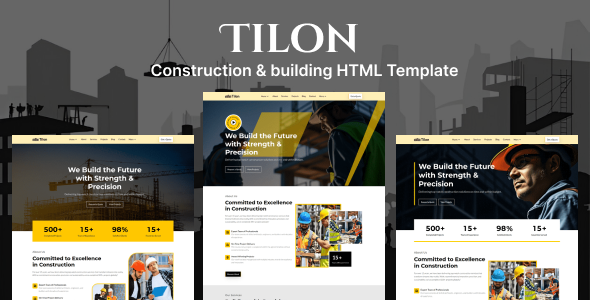
Tilon is an HTML template built with Tailwind CSS for construction and building firms. It offers three homepage demos and essential pages to showcase services and projects quickly.
Tilon HTML Template for Construction Companies: A Developer's View
Alright, let's talk about Tilon. This isn't a WordPress theme or a full-blown CMS solution; it's a static HTML template specifically for construction, building, and architecture firms. What it does well is give you a modern, clean starting point without the bloat often found in more complex systems.
For an agency or a freelancer, this template solves the initial setup headache. Instead of building core layouts and styling from scratch for a new client in the construction niche, you get a solid foundation ready to be populated with content. It's a smart investment if your workflow frequently involves delivering static sites or prototypes for these types of businesses.
Who Benefits from Tilon and Who Should Look Elsewhere
This template is genuinely useful for a few specific groups. Freelance developers and small agencies needing to quickly spin up a professional-looking static site for contractors or building companies will find it saves a ton of time. If you're comfortable with HTML, CSS (especially Tailwind CSS), and JavaScript, you can get a site live fast.
However, Tilon is not for everyone. If your client needs a full content management system to update their site daily, or if you're looking for deep custom backend logic, this isn't it. It's an HTML template, so all content and structural changes require direct code edits. Non-technical business owners or those looking for a drag-and-drop builder should absolutely look elsewhere.
Design and Visual Approach with Tailwind CSS
The design is clean and modern, as advertised. It uses full-screen hero images and a sticky header, which are standard but implemented well here. The real story here is Tailwind CSS. This framework means the styling is utility-first, giving developers fine-grained control directly in the HTML.
From a practical standpoint, this means consistent spacing, typography, and color schemes across the entire site. For a business owner, this translates to a professional, cohesive look that's easier to maintain and modify down the line, as a developer can make quick visual tweaks without digging through complex CSS files.
Included Layouts and Page Components
Tilon comes with three distinct homepage demos. This is enough to give you a few different starting aesthetics to choose from, which is handy for client presentations. Beyond the homepages, you'll find the typical pages a construction company needs: service details, project showcases, about us, and contact pages.
Standard elements like social links and a page preloader are included. In our experience with similar frameworks, having these common components pre-built saves significant development time. It means you're focusing on content and specific client requirements rather than reinventing basic site elements.
Code Quality and Developer Experience with Tilon
The template is built with Tailwind CSS, which is a big plus for developer experience. The code is flexible and well-commented, making it easier to navigate and customize. It uses JavaScript and CSS3 for animations, powered by libraries like Aos and Swiper for sliders, and Phosphoricons for icons.
When we tested the kit on a demo site, the file structure felt logical. For a developer, this means less time figuring out where things are and more time building. Well-structured code leads to lower maintenance costs and fewer bugs in the long run, which is a direct benefit for the business owner.
Responsiveness and Browser Compatibility for Construction Sites
Tilon is fully responsive across devices, which is a non-negotiable standard today. The layouts adapt well, and the mobile menu behaves as expected. It's also cross-browser compatible, meaning it looks consistent whether viewed on Chrome, Firefox, or Safari.
For a construction business, a responsive site ensures potential clients can easily access information about services and projects from any device, whether they're on a desktop at the office or checking on a phone at a job site. This directly impacts user experience and potential lead generation.
SEO Readiness and Semantic Structure
While an HTML template doesn't handle all aspects of SEO, Tilon provides a clean, semantic HTML structure. This is important because search engines understand well-structured content better, which is a foundational element for good search engine visibility. It's not going to rank you number one overnight, but it gives you a solid base.
The way assets like Google Fonts are loaded should also be checked for optimal performance, which contributes to Core Web Vitals. A good structure means a developer can easily implement further SEO best practices, like schema markup, for the business owner to gain better online presence.
Final Thoughts on Tilon for Agency Work
After building multiple agency sites with tools like this, Tilon stands out as a solid, practical choice if you need a static HTML template for construction or building clients. It's not groundbreaking in its design, but it is clean, functional, and uses a modern framework in Tailwind CSS that developers appreciate.
The main limitation is that it's just HTML, so any dynamic features or content management will require additional work. However, if your goal is to quickly launch a professional-looking static site for a construction company website, Tilon saves significant time and provides a robust foundation. It's a tool that genuinely helps streamline a specific type of agency workflow, making it a worthwhile purchase for that niche.
FAQ
Can I easily change the color scheme of the Tilon template?Yes, because Tilon is built with Tailwind CSS, changing the primary colors or adjusting the overall scheme is straightforward for developers familiar with the framework's configuration file.
Is Tilon suitable for a large construction company with many projects?Tilon provides a strong visual foundation for showcasing projects and services. For very large companies needing dynamic content management or extensive filtering, integrating it with a CMS would be the next logical step.
Does Tilon support dynamic content or require a content management system?Tilon is an HTML template, meaning it's designed for static content. To manage dynamic content like blog posts or project updates, you would need to integrate it with a separate content management system or static site generator.
How does Tilon's structure impact website loading speed?Built with Tailwind CSS, Tilon generally benefits from optimized CSS. However, overall loading speed will also depend on image optimization, server performance, and how additional scripts are implemented after deployment.