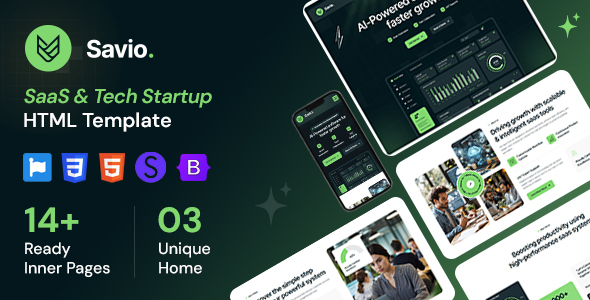
Savio is an HTML template for SaaS businesses and tech startups, delivering three distinct home page layouts, 10+ core content pages, and essential UI components. It’s for agencies and freelancers needing a quick, solid foundation for tech-focused landing pages.
Savio: A Practical HTML Template for SaaS & Tech Startups
This isn't a WordPress theme or a full-stack application; it's a collection of well-structured HTML, CSS, and JavaScript files. It's built on Bootstrap, which means a familiar grid system and component library for most frontend developers. Savio is designed to give you a head start on the visual presentation, covering common sections like feature blocks, pricing, and testimonials.
The template aims to provide a clean frontend shell for a SaaS landing page template or a tech startup website design without requiring a complex CMS setup. It’s about getting a presentable face for your product or service online quickly.
Who Savio Helps (and Who Should Look Elsewhere)
This template is genuinely useful for freelancers and small agencies building client sites on a budget or needing quick MVPs and proof-of-concept designs. If you frequently build frontend-heavy sites for tech clients and want to save time on initial styling, Savio provides a solid starting point.
However, it’s not for clients needing deep custom backend logic, complex user dashboards, or those expecting a full content management system experience out of the box. If your client needs to update content daily without touching code, this isn't the direct solution; you'd need to integrate it into a CMS separately.
Savio's Core Layouts and Essential Components
Savio includes three home page layouts, which is handy for testing different marketing angles—whether you want a feature-focused showcase or a conversion-optimized layout. Beyond the home pages, you get a standard set of core pages: About, Features, Team, Pricing, Testimonials, FAQ, Blog, Contact, and a 404 page.
The inclusion of specific pages like pricing and testimonials means less time building these common SaaS website elements from scratch. You’ll find ready-to-use components like pricing tables, testimonial sliders, and call-to-action banners, all crucial for a conversion-ready funnel.
Under the Hood: Savio's Code Quality and Developer Experience
The original description mentions "clean, semantic, and developer-friendly code." In our experience with similar Bootstrap frameworks, this usually translates to well-commented HTML and a logical CSS structure, likely using SASS for better organization. This kind of structure makes it easier to find and modify styles, which translates to lower maintenance costs for clients down the line.
Asset loading generally feels snappy with Bootstrap-based templates, and Savio seems to follow standard practices here, which is good for Core Web Vitals. The code organization helps ensure that when you move the files or change a color, the process is straightforward compared to some market-average templates with tangled CSS.
Ensuring a Consistent Experience Across Devices and Browsers
It's fully responsive, which is expected these days, but it's important that the mobile menu behaves predictably and content doesn't break on smaller screens. This ensures a good mobile experience for your client's customers.
Cross-browser compatibility is also standard practice; it should look consistent across Chrome, Firefox, Safari, and Edge. This means fewer headaches during quality assurance for the end client, reducing time spent on browser-specific bug fixes.
Savio's Foundation for Search Engine Optimization
The "clean, semantic" code mentioned is crucial for SEO. This means proper heading tags, logical document flow, and a structure that search engines can easily understand. While an HTML template doesn't handle all SEO aspects, like dynamic meta descriptions or sitemaps automatically, a solid semantic foundation is a good start.
This structure helps ensure that content is crawlable and indexable effectively, providing a good base for any further SEO work. Good semantic structure also contributes to better accessibility practices, which is a growing factor in overall site quality and user experience.
The Bottom Line: Is Savio Worth Your Time?
If you're an agency or freelancer frequently building frontend-heavy sites for tech clients, Savio offers a solid starting point. It saves significant time on initial setup and styling of common components compared to building from scratch, especially for a tech startup website design.
The main limitation is that it's a static HTML template; content updates will be manual, and any backend integration requires custom work. However, for quickly getting a professional-looking SaaS product landing page or a digital agency site off the ground, it's a smart investment to cut down development hours. It provides a clean, maintainable base that feels more grounded than many over-hyped alternatives.
FAQ
Is Savio easy to customize for someone with basic HTML/CSS knowledge?Yes, because it’s built on Bootstrap, most developers familiar with that framework will find the code structure logical and straightforward to modify.
Can I integrate Savio with a backend system like a CMS or custom application?Savio provides the frontend HTML structure, so you would need to manually integrate its pages and styles into your chosen backend system or CMS, which requires development work.
How do I manage content updates after the site is live?Since Savio is a static HTML template, all content updates would need to be done manually by editing the HTML files directly, then re-uploading them to your server.
Does this template include any JavaScript for interactive elements?Yes, it includes standard JavaScript for common interactive elements like navigation menus, testimonial sliders, and potentially form validations, typically leveraging Bootstrap's JS components.