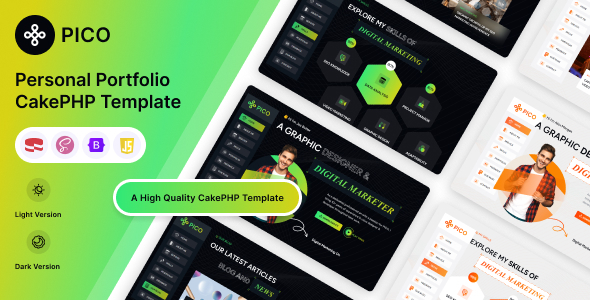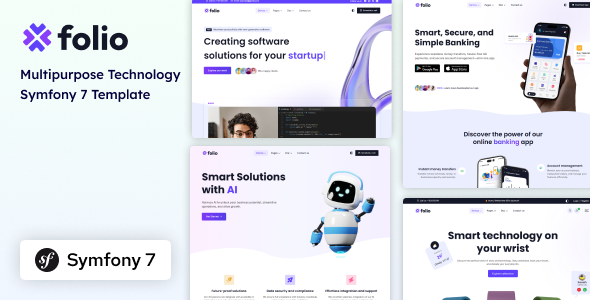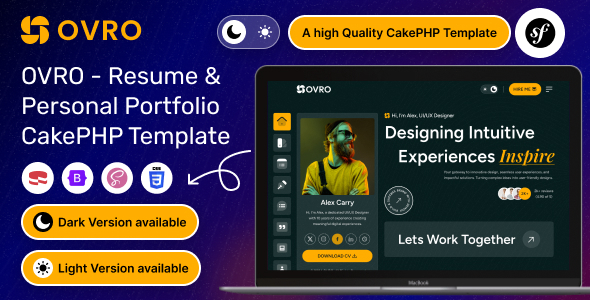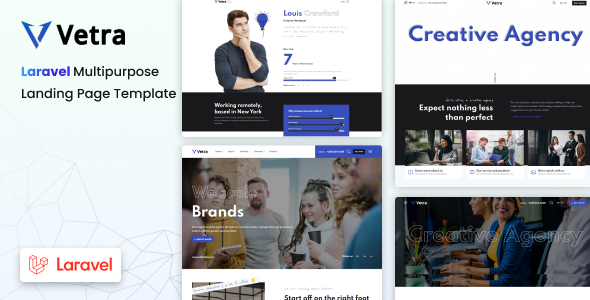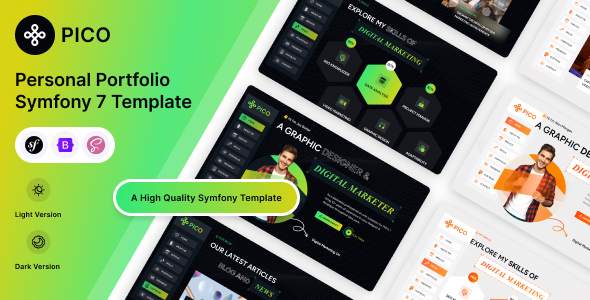
PICO is a clean, personal portfolio template built with Symfony and Bootstrap, designed for developers, designers, and freelancers needing a fast, professional online presence.
PICO Template: A Symfony-Based Portfolio Starter
This isn't just another static HTML template; PICO provides a complete frontend structure for a personal portfolio or blog, integrated directly into a Symfony application. It gives you a head start on building a custom portfolio website development project, handling the initial setup and design work within a robust PHP framework. The core idea here is to save a Symfony developer significant time on the initial design and basic page scaffolding.
Who Benefits from PICO and Who Should Skip It
PICO is genuinely useful for developers who are already working within the Symfony ecosystem or plan to build their portfolio application using Symfony. If you're an agency building custom applications for clients, or a freelancer looking to showcase your work with a solid backend foundation, this template offers a well-organized starting point. It's particularly good for those needing a quick, professional Symfony personal portfolio template.
However, if you're looking for a drag-and-drop builder, a WordPress theme, or a purely static HTML template without any backend framework, PICO is not for you. This product assumes a level of comfort with Symfony and backend development. Non-technical users or those who prefer a CMS-first approach will find this more complex than necessary.
Design and Visual Approach for a Developer Portfolio
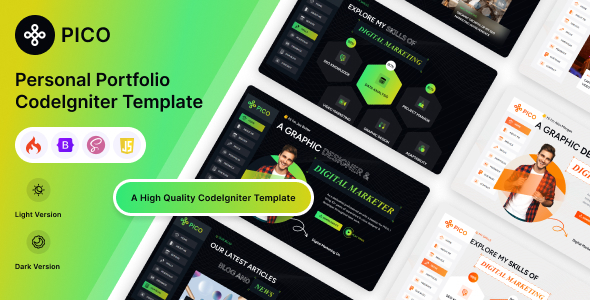
The template follows a minimal and clean design philosophy, which is generally a good thing for developer portfolios. It keeps the focus on the content—your projects and skills—rather than overwhelming visuals. You get both dark and light theme options, which is a standard expectation these days and easy to switch. The design feels contemporary without being overly trendy, aiming for longevity. Fonts are handled via Google Fonts (Figtree) and icons with Font Awesome, which are reliable and widely supported choices.
Layouts and Components for Your Online Presence
While the description doesn't list specific page counts, a personal portfolio template typically includes essential sections like an "About Me," "Services," "Portfolio" or "Projects," and a "Contact" page. Given its focus, you can expect these core layouts to be present, providing the basic structure needed to display your work and skills. The promise of "pixel perfect design" means the visual elements should align correctly across different screens, which is important for a polished look.
Code Quality and Developer Experience
This is where PICO stands out from many generic templates. Being built with Symfony and Bootstrap implies a structured, maintainable codebase. The claim of well-commented code and a well-documented file structure is critical for developers. In our experience with similar frameworks, this means less time spent reverse-engineering someone else's logic and more time building out your unique features. The underlying valid HTML5 and CSS3 are foundational for good SEO and accessibility practices. This structured approach helps keep long-term maintenance costs down for any Symfony developer portfolio website.
- The Symfony integration provides a robust backend structure from day one.
- Bootstrap ensures a familiar and well-supported frontend framework for styling.
- Clean code and documentation ease customization and future development.
Responsiveness and Browser Compatibility
PICO covers the basics here, which is expected for any modern web asset. It's fully responsive and mobile-friendly, meaning your portfolio will look correct on phones, tablets, and desktops. Cross-browser optimization is also mentioned, so you shouldn't run into major rendering issues across different browsers. The inclusion of RTL (Right-to-Left) support is a nice touch for internationalization, though not always a primary concern for every personal portfolio.
SEO Readiness for Your Portfolio
Starting with valid HTML5 and CSS3 provides a solid technical SEO foundation. The clean semantic structure is crucial for search engines to understand your content, helping with discoverability for potential clients or employers searching for your skills. While the template itself won't guarantee rankings, it won't actively hinder them, which is more than can be said for some bloated themes. Proper heading structure and image optimization would still be up to the implementer, but the template gives you a good starting point for a performant site that supports Core Web Vitals.
Final Verdict: A Solid Base for Symfony Developers
If you're a developer who works with Symfony and needs a fast track to getting a professional portfolio online, PICO is a smart investment. It handles the initial frontend design and integrates it into a Symfony project, saving you the headache of setting up the basic UI from scratch. While the forms included are likely just styled HTML and require backend implementation, the overall structure and clean code provide an excellent foundation. This template is a time-saver for anyone looking to build a custom portfolio website development project within the Symfony framework, letting you focus on showcasing your actual work rather than wrestling with initial setup.
FAQ
Does PICO include a functional backend for forms?No, PICO provides the styled HTML and CSS for forms, but the backend logic for submission and data handling would need to be implemented by you within the Symfony framework.
How easy is it to customize the design beyond the dark/light modes?Since it's built with Bootstrap, basic styling changes are straightforward if you're familiar with CSS and Bootstrap's utility classes. For deeper visual changes, you'll need to work with the underlying CSS/Sass structure.
Can I easily integrate this template with a different PHP framework or CMS?While the frontend assets (HTML, CSS, JavaScript) could be extracted and adapted, the template is specifically structured as a Symfony application. Integrating it with another framework or CMS would essentially mean stripping out the Symfony-specific parts and re-implementing the frontend, which would be more work than starting with a generic HTML template.