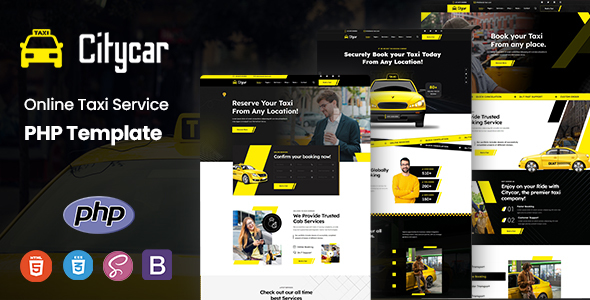
Citycar is a PHP template for online taxi services, car rentals, and transport businesses. It offers 23+ files, Bootstrap framework, and key UI components for rapid deployment.
Citycar PHP Template: What It Is and What It Does
This isn't a full-blown application or a CMS theme. Citycar is a front-end PHP template designed to give you a head start on building websites for the taxi, car rental, or general transport business niche. It provides a collection of pre-built HTML, CSS, and JavaScript, with PHP files likely used for basic includes like headers, footers, and navigation. Think of it as a robust set of static pages that you can quickly adapt.
Who Benefits from This Car Rental Website Front End
This template is for agencies and freelancers who need to deliver a solid, visually consistent front end for clients in the transportation sector quickly. If you're building an online taxi service PHP template site and want to avoid designing every page from scratch, this could save you a significant amount of time. It's especially useful for projects where the backend logic will be custom-built or integrated separately.
However, it's not for everyone. If you're looking for a complete, out-of-the-box booking system or a deep, complex content management solution, this isn't it. This template won't handle your database, user authentication, or payment gateways. It's also probably overkill if you need extreme, pixel-perfect custom design that deviates significantly from Bootstrap's structure.
Layouts and Components for Transport Business Website Design
Citycar comes with over 23 PHP files, which translate into a good number of pre-designed pages and sections. You get three multi-page index demos, giving you distinct starting points for different client needs. The inclusion of components like parallax sections and smooth animations means you can add a bit of polish without writing custom JavaScript.
- Revolution Slider: This is a powerful, well-known slider plugin. It can create engaging hero sections and galleries, which is useful for showcasing vehicles or service areas on a transport business website design.
- Menuzord – Responsive Megamenu: A megamenu is practical for sites with many service categories or locations, helping users navigate complex information easily.
- Icon Sets: With Font Awesome, 7 Stroke, and Elegant Icon Font, you have a massive library of icons available. This is great for illustrating services or features without relying on custom graphics.
Code Quality and Developer Experience
Built with Bootstrap, the underlying structure is familiar and generally well-organized. This means developers comfortable with Bootstrap can jump in and make changes without a steep learning curve. The use of SCSS indicates a structured approach to CSS, which makes styling adjustments more manageable and maintainable in the long run. We appreciate that because, in our experience with similar frameworks, clean CSS architecture directly reduces maintenance costs for clients.
The template is well documented, which is crucial when you're taking over a project or handing it off. This helps you understand how components are put together and how to extend them. While it's a PHP template, the PHP files primarily serve for includes, so you're mostly dealing with standard front-end code.
Responsiveness and Compatibility
The template is fully responsive, meaning it adapts well to various screen sizes, from desktops down to small mobile devices. This is a standard expectation today, but it's good to see it handled competently. A responsive design ensures your client's customers have a consistent and positive experience whether they're booking a ride on a phone or browsing services on a desktop. It's also cross-browser compatible, so you won't spend extra time fixing display issues across different browsers.
SEO Readiness
From an SEO perspective, the clean and simple design, combined with a semantic structure that Bootstrap generally provides, is a good foundation. Search engines prefer well-structured content, and a clean HTML markup helps with indexing. The template uses free Google Fonts, which means consistent and fast font loading, a small but important detail for page speed and Core Web Vitals. While it won't handle your meta descriptions or content optimization, it provides a solid technical base for an online taxi service PHP template.
Final Thoughts
Citycar delivers exactly what it promises: a strong, ready-to-use front-end template for the transportation industry. If your workflow involves quickly launching visually appealing client sites in this niche, and you're comfortable integrating a separate backend or adding custom PHP logic, this template is a solid investment. It provides a significant head start, saving you design and basic front-end development hours. While the included Revolution Slider and Menuzord are powerful, consider if their full feature sets are truly necessary for every project, as they can add to the overall asset load. Overall, for an agency needing rapid deployment for a car rental website front end, this template is genuinely useful.
FAQ
Is Citycar a complete booking system for taxis or car rentals?No, Citycar is a front-end PHP template. It provides the visual design and user interface, but it does not include any backend logic for booking, payments, or user management.
Can I integrate this template with my own custom PHP backend or a CMS?Yes, you can. Since it's a collection of HTML, CSS, JavaScript, and basic PHP includes, you can integrate it with a custom PHP backend or adapt it to work with a CMS by extracting the relevant front-end components.
How easy is it to customize the design and layout?Given it's built with Bootstrap and uses SCSS, customizing the design is relatively straightforward for anyone familiar with these technologies. You can modify the SCSS files to change colors, typography, and component styling, and adjust the HTML structure as needed.
Does this template support multiple languages for international clients?The template itself provides the visual structure, but it does not include built-in multi-language support or translation features. You would need to implement a separate localization solution or integrate a third-party translation tool.