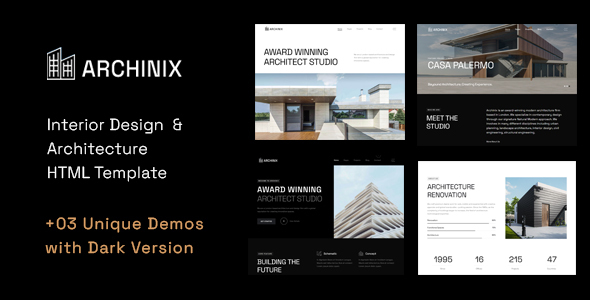
The Archinix HTML template is a set of pre-built web pages designed for architectural firms and interior design studios looking to quickly launch a professional online presence.
Streamlining Project Showcases for Architecture Firms and Interior Design Studios
When you're running an agency, the biggest time sink often isn't the design itself, but translating that design into functional, presentable code. This Archinix HTML template solves the headache of starting from scratch, especially for design-centric businesses that need to display high-quality project portfolios without spending weeks on front-end development.
In our experience building multiple agency sites, having a solid set of pre-built layouts like these can shave off significant hours, particularly on initial setup and styling. It means you can focus on content and client-specific adjustments rather than wrestling with foundational CSS or JavaScript for common components.
Evaluating Code Quality and Practical Features for a Design Agency Website
Diving into the Archinix template files, the code structure is what you’d expect from a modern Bootstrap-based kit. It uses SASS, which is a good sign for maintainability; variables for colors, fonts, and spacing are easy to locate and adjust. This SASS architecture is a practical benefit for any business owner, as it means future design changes are less costly and quicker to implement.
The template includes 20+ HTML files, covering typical pages like home, about, services, portfolio, and contact. This is standard for a template of this type, providing a solid foundation for an interior design website template workflow without requiring you to build every page from scratch.
- Asset Loading: Images and scripts are loaded in a sensible order, which helps with initial page render times. This directly impacts Core Web Vitals, contributing to a better user experience and potentially improved search engine rankings.
- Mobile Responsiveness: The layouts adapt well across devices. The mobile menu implementation is clean and functional, avoiding common pitfalls like overly complex animations or difficult-to-tap areas.
- GSAP Integration: The inclusion of GSAP for animations is a nice touch. It allows for smoother, more performant visual transitions compared to basic CSS animations, making the site feel more polished without adding significant overhead. For a business, this translates to a more engaging visitor experience, potentially increasing time on site.
- Semantic Structure: The HTML uses appropriate semantic tags (e.g., header, nav, main, article, footer). This is crucial for accessibility and helps search engines understand content hierarchy, which is a fundamental aspect of good SEO.
Key Strengths of Archinix for Architecture and Interior Design Portfolios
What stands out is the visual consistency. While many templates promise "pixel-perfect," Archinix actually delivers a cohesive design language across its various pages. The use of Google Fonts and consistent spacing ensures a professional look right out of the box. The light and dark versions are also well-executed, offering immediate design flexibility for different brand aesthetics.
Who Benefits from This HTML Template for Architecture Firms and Who Should Look Elsewhere
This Archinix HTML template is ideal for small to medium-sized architectural firms, interior designers, or agencies needing to quickly launch a client's portfolio site. It’s perfect for those who are comfortable with HTML/CSS and perhaps a bit of JavaScript, and who prioritize speed to market over deep, custom backend logic. If you're building a static site or plan to integrate it into a simple CMS later, this is a strong candidate for pre-built layouts for design agencies.
However, it is not for those who need a full-stack solution with complex database interactions, user authentication, or a built-in content management system. If your project requires extensive backend development or a highly dynamic, interactive platform beyond front-end animations, you'll need to look at more integrated frameworks or full CMS themes.
Practical Limitations of the Archinix Architecture HTML Template
While the template provides a solid visual foundation, some sections, like the blog layouts, feel fairly standard and don't offer much in the way of unique design or functionality compared to market-average templates. Additionally, while the SASS structure is good, the overall project setup assumes a basic static site deployment. Integrating it into a more complex build process (like Webpack or Gulp for asset optimization) would require additional setup, which isn't inherently part of the template package.
Final Thoughts: Is it worth it?
For agencies or freelancers tasked with delivering a professional online presence for architecture or interior design clients on a tight schedule, the Archinix HTML template is a genuinely useful tool. It provides well-structured code, a clean design, and all the common page layouts needed to get a project off the ground quickly. The time saved on initial setup and front-end styling easily justifies the investment, allowing you to focus on content and client-specific details.
FAQ
Does this template include a working contact form?No, like most HTML templates, Archinix provides the visual layout for a contact form but does not include server-side processing or an integrated submission script. You would need to connect it to a backend service or a third-party form provider.
How easy is it to change the primary colors and fonts?Changing primary colors and fonts is straightforward due to the SASS architecture. Key variables are organized, allowing you to update them in one place, which then propagates across the entire template.
Is this template optimized for search engines?The template provides a clean, semantic HTML structure and fast loading times, which are fundamental for SEO. However, on-page SEO factors like content quality, keyword usage, and meta descriptions would need to be handled when you add your specific content.
Can I use this template with a content management system (CMS)?Yes, you can integrate this HTML template with a CMS like WordPress or Craft CMS. It would require a developer to convert the static HTML pages into dynamic CMS templates, mapping content areas to the CMS fields.