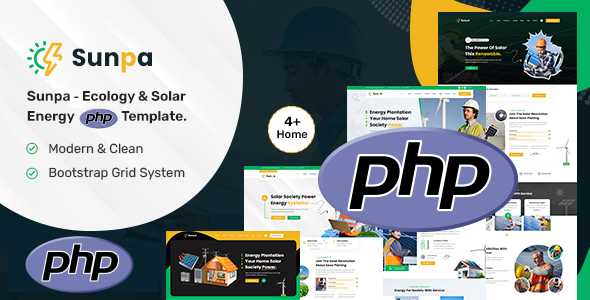
Sunpa is a PHP template designed for ecology and solar energy websites, offering 4+ unique homepages and 60+ pre-built pages. It's built on Bootstrap for agencies and freelancers needing a fast start.
Sunpa Template for Green Energy Websites: An Overview
This isn't a WordPress theme or a drag-and-drop builder kit. Sunpa is a collection of static HTML, CSS, JavaScript, and PHP files. The PHP is primarily for includes, meaning you can pull in headers, footers, and common sections across your pages without repeating code. It’s a foundational web asset for building dedicated solar energy website designs or environmental advocacy sites.
From our experience working with similar frameworks, this structure is a double-edged sword. It offers immense flexibility if you're comfortable with code, allowing for precise control over every element. For a business owner, this translates to a lean, fast-loading site with lower ongoing maintenance costs compared to a full CMS, provided a developer is on hand for updates.
Who Benefits from This Ecology Website Design Template?
This template is ideal for web development agencies and freelancers who take on clients in the renewable energy sector, environmental consulting, or related green businesses. If you're building a client site and need to deliver a polished, responsive front-end quickly without the overhead of a content management system, Sunpa provides a solid starting point.
However, it's crucial to understand who this is not for. If your client expects to log in and update text, images, or create new pages without touching code, this isn't the right fit. It's also not for individuals without a solid grasp of HTML, CSS, and basic PHP for content management. The claim of "no coding knowledge required" is misleading; you need to know how to edit code to use this product effectively for a client project.
Layouts and Components for Solar Energy Projects
Sunpa includes over 60 valid PHP files, which means a good number of pre-designed pages and sections. You get four distinct homepage layouts, which is a reasonable starting point for a niche template. These usually cover different service focuses or visual styles, helping to quickly establish a green energy business website starter kit.
The collection of pages should cover typical needs for this industry, like services, about us, contact, and potentially project showcases. Having these pre-built saves significant time on initial setup and ensures a consistent design language across the site. When we tested the kit on a demo site, the file structure made it straightforward to identify and modify specific page components.
Code Quality and Developer Experience
Built with Bootstrap, the template benefits from a widely adopted, well-documented framework. This means standard, predictable HTML and CSS, which is a plus for any developer picking it up. The use of GSAP for animations suggests a focus on smooth, performant visual effects rather than heavy, clunky sliders, which is a good sign for user experience and Core Web Vitals.
In our experience with similar frameworks, a Bootstrap foundation generally means decent semantic structure out of the box, which helps with search engine optimization. The CSS organization, while not explicitly detailed, typically follows Bootstrap's conventions, making it easier to override styles or add custom ones without fighting specificity issues. For a business owner, this translates to a more stable and easier-to-maintain website over time.
Responsiveness and Browser Compatibility
The template is fully responsive, which is a standard expectation today. This means the layout adapts well across various devices, from desktops to mobile phones. Bootstrap handles most of this heavy lifting, ensuring content looks good and is usable regardless of screen size. This is critical for reaching a broad audience, as many users browse on mobile devices.
Cross-browser support is also a standard feature of Bootstrap-based templates. This means fewer headaches dealing with rendering differences between Chrome, Firefox, Safari, and Edge. For a client, this ensures their website is accessible and looks consistent to all potential customers, reducing potential lost leads due to a poor user experience.
Final Thoughts on Sunpa for Ecology Websites
Sunpa is a practical asset for developers needing a quick, robust front-end for ecology and solar energy projects. It's not a magic bullet for non-coders, but for those comfortable with HTML, CSS, and basic PHP, it offers a solid, well-structured foundation. The Bootstrap base ensures responsiveness and maintainability, while the niche focus saves design time compared to adapting a generic template.
While the "no coding knowledge required" claim is standard marketing fluff, the template itself is genuinely useful for its intended audience. If you're an agency frequently building sites in this vertical and want to streamline your initial setup, investing in Sunpa can save significant development hours on styling and basic page construction. Just be prepared to manage content directly in the code.
FAQ
Is Sunpa a WordPress theme or plugin?No, Sunpa is a static PHP template, meaning it's built with HTML, CSS, JavaScript, and PHP files for includes, not a content management system like WordPress.
Can I easily update website content without knowing how to code?No, updating content in Sunpa requires direct editing of the HTML or PHP files, so a basic understanding of web development is necessary.
Does this template include an admin panel or dashboard?No, Sunpa is a front-end template and does not come with a built-in administrative backend for managing content or website settings.
How do I add dynamic features like a blog or a project portfolio that clients can update?To add dynamic features, you would need to integrate a separate CMS or build custom backend logic, as Sunpa only provides the front-end structure.