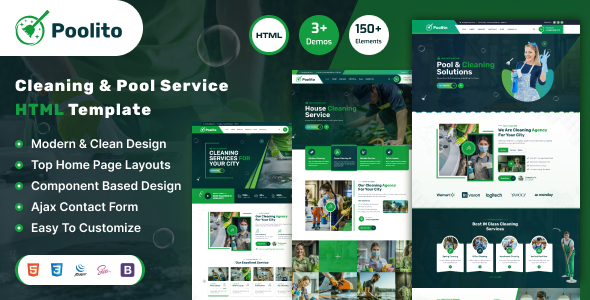
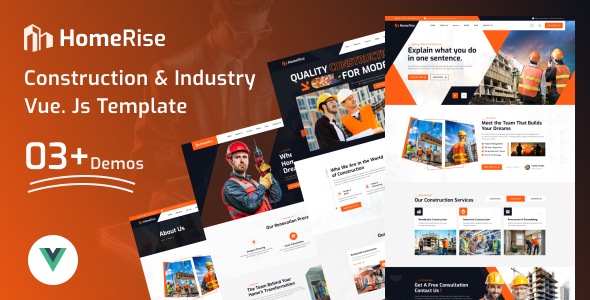
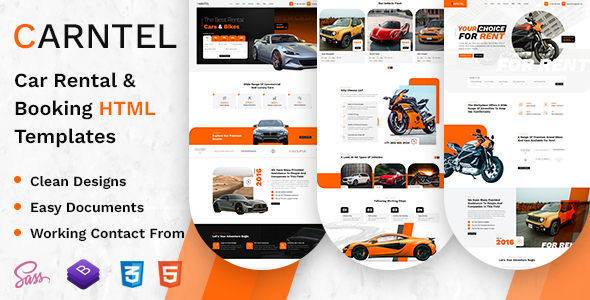
WebFlux is an HTML template for digital agencies, startups, and creative businesses, offering 3 homepages, 25 HTML pages, and Bootstrap integration for quick site launches.
WebFlux: A Static HTML Template for Digital Agencies
This WebFlux template is a collection of pre-built HTML, CSS, and JavaScript files designed for digital agencies, tech startups, and creative businesses. It's a static site, meaning it doesn't come with a content management system (CMS) like WordPress or a backend database. Its core purpose is to provide a ready-made front-end structure for quickly launching a professional-looking website without needing server-side development.
When we tested the kit on a demo site, the value here is in the initial setup speed. You get a fully designed, multi-page site that just needs your content plugged in. This saves a significant chunk of time compared to building every page from scratch or wrestling with a complex page builder for a simple brochure site.
Who Benefits from this Agency Website Template?
This digital agency HTML template is a good fit for specific scenarios. Freelancers or small agencies needing to spin up client sites quickly, especially for basic online presences, will find it useful. It's also suitable for tech startups that need a landing page or a simple informational site to get online fast without much ongoing content change.
However, it's not for everyone. If you need a site with dynamic content, user accounts, complex forms, or a blog that needs frequent updates by non-technical staff, this isn't your solution. It's also not ideal if you're looking for a fully functional ecommerce website template with a shopping cart and payment processing built-in; the shop pages here are purely for display.
Layouts and Pre-built Pages for Creative Businesses
WebFlux comes with three distinct homepage layouts, which is a decent starting point for offering variety to clients or for different project types. Beyond the homepages, you get around 25 individual HTML pages covering common agency needs: About Us, Services, Projects, and Contact. There are also different blog page styles and dedicated shop pages.
This breadth of pre-designed content means you won't be building basic pages from scratch. For a `static website for creative business`, having these common layouts ready to go means you can focus on populating them with client-specific text and images rather than structuring the page flow.
Business Features and Ecommerce Considerations
The template includes what it calls "shop pages." It's important to understand these are static HTML layouts. They provide a visual structure for displaying products or services with images and descriptions, but they don't include any backend functionality for adding items to a cart, processing payments, or managing inventory. For actual sales, you'd need to integrate a third-party ecommerce solution or link out to external platforms.
For an agency showcasing its own services or a startup with a few key products, these pages work well as a digital catalog. Just be aware of the distinction; this isn't a transactional platform out of the box.
Code Quality and Developer Experience Insights
The template is built on Bootstrap, which is a common and widely understood front-end framework. This means developers familiar with Bootstrap will find the structure predictable and relatively easy to navigate. The CSS is organized in a `style.css` file, which is standard, and customization for things like banner colors is done by editing specific classes in that file.
One thing I noticed after building multiple agency sites with tools like this is that color changes are handled by searching and replacing hex codes directly in the CSS. While functional, it's a bit old school. A more modern approach would involve SASS variables for easier global color management. It uses `wow.js` for on-load animations, which adds some visual flair but can sometimes contribute to slightly longer initial page loads, impacting perceived performance for some users. The underlying jQuery version is quite recent, which is good for compatibility with other scripts.
Responsiveness and Browser Compatibility
WebFlux follows standard responsive design principles. This means the layouts adapt to different screen sizes, from desktops down to mobile phones. In our experience with similar frameworks, Bootstrap-based templates generally handle responsiveness well across various devices, which is critical for good user experience and search engine ranking today. It claims compatibility with all modern browsers, which is expected for any template released recently.
SEO Readiness and Site Performance
Being a static HTML template, WebFlux has a natural advantage in terms of initial load speed. There's no server-side processing or database queries, so the browser just downloads and renders the files. This generally translates to good Core Web Vitals scores, which is a factor in search engine ranking. The "search engine friendly" claim likely refers to its clean HTML structure, which allows search engines to easily crawl and understand the content. Proper heading tags and semantic accessibility are key here, and a well-structured static site usually delivers on that front.
However, ongoing SEO management like dynamic sitemaps or schema markup would need to be handled manually or with external tools, as there's no CMS to automate it.
Final Thoughts on WebFlux for Digital Projects
If you're an agency or freelancer looking for a solid foundation to quickly build static client sites, especially `responsive agency portfolio layout` or a basic informational site for a tech startup, WebFlux is a practical choice. It offers a good range of pre-built pages and a familiar Bootstrap structure, which can save you a lot of development time on the front end.
While it uses an older version of Bootstrap and lacks SASS for more efficient styling, these are acceptable trade-offs for the speed and simplicity it provides. It's a tool that genuinely helps you get a professional-looking site live fast, provided your project doesn't require complex backend functionality or a CMS.
FAQ
Can I easily integrate this HTML template with WordPress?No, this is a pure HTML template. Integrating it with WordPress would require significant development work to convert it into a theme, which is not a straightforward process.
Is this template suitable for a fully functional online store with payment processing?No, the shop pages are for display purposes only. To have a functional online store, you would need to integrate a separate ecommerce platform or build out the backend functionality yourself.
How difficult is it to change the overall design and colors of the template?Changing colors and basic design elements involves directly editing the `style.css` file. While not overly complex for someone with CSS knowledge, it requires manual search and replace for global color changes.
Will this template perform well on Google Core Web Vitals and general site speed?Being a static HTML template, it generally has an advantage in loading speed, which positively impacts Core Web Vitals. However, the `wow.js` animations could add a slight overhead, so testing is always recommended after customization.