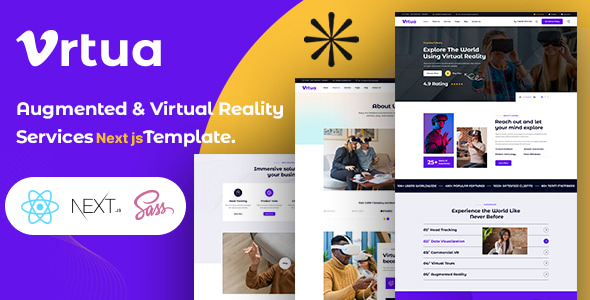
Vrtua is a Next.js template for virtual reality and augmented reality service websites. It offers a clean, responsive base with 10+ pages, ideal for agencies and freelancers.
Vrtua Next.js Template for VR Services: An Overview
This Vrtua template is a frontend starter kit built with Next.js and TypeScript, aimed squarely at businesses in the virtual reality, augmented reality, crypto, or esports space. It provides a pre-built set of pages and components, designed to get a modern-looking site for these niches up and running without starting from an empty project folder. It's essentially a well-structured shell you fill with your client's content.
The main problem this solves is cutting down initial development time. Instead of configuring a Next.js project from scratch, setting up a UI library, and designing common pages, you get a ready-made structure. For an agency needing fast turnarounds on a virtual reality agency site, this can save significant hours on the setup and basic styling work.
Who Needs This Augmented Reality Website Template (and Who Doesn't)
This template is for developers, agencies, and freelancers who are comfortable working with Next.js and TypeScript. If your workflow involves delivering modern, performant React-based websites for clients in the VR, AR, or related tech sectors, this gives you a head start. It's a smart investment if you value a solid, contemporary tech stack and want to leverage server-side rendering benefits for your projects.
However, this is not for someone looking for a drag-and-drop solution or who lacks experience with React and Next.js. It's also not ideal if you need a deeply custom backend logic or a completely unique, non-Bootstrap-based design out of the box. If you're building a complex web application with extensive database interactions, you'll need to integrate your own backend, as Vrtua is primarily a frontend presentation layer.
Design and Visual Approach for VR/AR Websites
The design is clean and modern, leveraging Bootstrap for its foundational grid and component styling. This means you get standard responsiveness and a familiar structure. The template uses Google Fonts, specifically Montserrat Alternates and Plus Jakarta Sans, which give it a contemporary feel. When we tested the kit on a demo site, the font loading felt quick, though for strict GDPR compliance, you might consider self-hosting the fonts.
With only one main homepage demo, the visual variety is somewhat limited. You get a solid, functional base, but if your client demands a highly unique aesthetic that deviates significantly from Bootstrap's default look, you'll be spending time overriding styles rather than just configuring components. This is a common trade-off: fast setup with a known framework versus completely bespoke design.
Pages and Components for a Virtual Reality Agency Site
Vrtua includes over 10 valid TSX files covering essential pages like About, Services, Blog, and FAQ. Having these standard pages pre-built saves a lot of boilerplate work. The included UI Kit elements mean you have a consistent set of buttons, forms, and other interface pieces to work with, which helps maintain design consistency across your augmented reality website template.
The structure for these pages is logical, making it straightforward to plug in your client's content. For instance, setting up a services page to showcase different virtual reality solutions is a matter of populating the existing component structure rather than building it from scratch.
Code Quality and Developer Experience with Vrtua
One of the biggest advantages here is the use of Next.js with the App Router and TypeScript. This means you're working with a modern, type-safe codebase that reduces errors and improves maintainability. In our experience with similar frameworks, TypeScript significantly enhances collaboration on larger projects, making it easier for new developers to jump in.
The code is based on Bootstrap, which provides a familiar CSS architecture. While the description mentions "clean and commented code," which is always a plus, the actual organization of specific component styles will determine how easy it is to customize without fighting the framework. The W3C valid code is a standard expectation, ensuring a clean semantic structure for SEO and accessibility.
Responsiveness and Compatibility for Modern Devices
Being 100% responsive and touch-friendly is standard practice today, and the Bootstrap foundation ensures this works reliably across various screen sizes. The template has been tested for modern browser compatibility, which means less time spent on cross-browser debugging. How the mobile menu behaves, for example, is a detail developers often notice, and a Bootstrap base generally handles this well, providing a consistent user experience on smaller devices.
SEO Readiness for Virtual Reality Solutions
The template is described as "SEO on-page optimized." This typically means it uses proper semantic HTML5 elements for headings, paragraphs, and lists, which helps search engines understand your content structure. Next.js itself offers benefits for SEO through server-side rendering or static site generation, which ensures content is readily available to crawlers, potentially impacting Core Web Vitals positively by delivering faster initial page loads.
Final Thoughts on the Vrtua Next.js Template
Vrtua offers a solid, modern foundation for building virtual reality and augmented reality service websites using Next.js and TypeScript. If you're an agency or freelancer comfortable with this tech stack, it's a valuable tool for quickly launching client projects in these specific niches. It genuinely solves the problem of starting from zero, providing a well-structured, responsive frontend.
While it only includes one demo, the focus on a modern stack and clean code makes it a worthwhile investment for saving development time. You get a robust starting point that you can extend and customize, making it a logical next step if you want to deliver performant websites efficiently without reinventing the wheel for every new client.
FAQ
Is Vrtua a complete full-stack application?No, Vrtua is a frontend Next.js template. It provides the user interface and presentation layer, but you would need to integrate your own backend for database interactions or server-side logic.
Does Vrtua support custom backend integrations?Yes, as a frontend template, Vrtua can easily integrate with any backend API you choose. You would connect your data fetching logic within the Next.js components.
How easy is it to change the overall design and colors?Since it's built with Bootstrap, changing primary colors and basic styling is straightforward by overriding Bootstrap variables or custom CSS. However, achieving a completely unique design beyond Bootstrap's framework will require more in-depth CSS and component-level adjustments.
Is this template suitable for someone new to Next.js or React?This template is best suited for developers already familiar with Next.js and React concepts, as it requires hands-on coding to customize and extend. It's not a low-code or no-code solution for beginners.



.__large_preview.png)