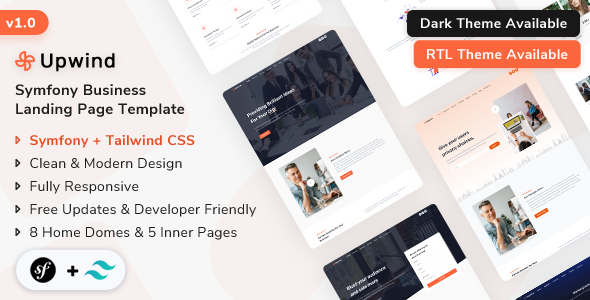
Upwind is a Symfony landing page template built with Tailwind CSS, offering multiple demo layouts for quick project starts. It's designed for developers and agencies needing a solid foundation for web applications or marketing sites.
Symfony Landing Page Template for Rapid Development
Upwind is a Symfony-based landing page template that leverages Tailwind CSS. If you're building a web application with Symfony or need a marketing site that integrates with a PHP backend, this template provides a starting point. It comes with several pre-built home pages and basic internal pages, aiming to speed up the initial setup process for projects where Symfony is the chosen framework.
Who This Symfony Template Is For and Who Should Skip It
This template is primarily for developers working with Symfony who need a visually appealing and functional landing page quickly. Agencies looking to offer clients Symfony-powered web applications or marketing sites might also find value here, especially if speed to market is a key concern. If you are building a complex, custom-coded backend application from scratch without a specific framework in mind, or if you are a designer who prefers visual builders, this template might not be the best fit.
Landing Page Demos and Core Components
Upwind offers a decent selection of home page demos, around nine in total. These are useful for showcasing different application features or marketing angles. It also includes a few essential inner pages like blog and portfolio detail views, which are standard for many web projects. The inclusion of authentication pages is a practical touch for applications that require user logins.
Design and Visual Approach
The design leans towards a clean and modern aesthetic, which is common in landing page templates. It uses Tailwind CSS, meaning the styling is utility-first. This approach allows for quick customization of colors, spacing, and typography without diving deep into custom CSS for every small change. The inclusion of both a light and a dark theme offers some immediate visual flexibility.
Code Quality and Developer Experience
Built on Symfony and Tailwind CSS, the underlying structure should be familiar to developers working with these technologies. The description mentions SASS workflow and well-commented code, which are good signs for maintainability and easier customization. For developers accustomed to PHP frameworks and utility-first CSS, integrating this template into an existing Symfony project should be relatively straightforward. It aims for a clean semantic structure which is good for SEO readiness.
Responsiveness and Compatibility
As expected with most modern templates, Upwind is designed to be responsive. This means the layouts adapt well across different screen sizes, from desktops to mobile devices. This is crucial for ensuring a good user experience and for maintaining search engine rankings, as Google prioritizes mobile-friendly websites. The template uses standard CSS practices for layout and should render consistently across major browsers.
SEO Readiness
The template is built with HTML5 and CSS3 markup, which is standard for current web development. A clean semantic structure is important for search engines to understand your content. While the template provides a solid foundation, effective SEO will still heavily depend on the content you add and your overall optimization strategy. It's designed to be a good starting point for creating conversion-ready funnels.
A Realistic Take on Upwind
Upwind serves a specific purpose: to give Symfony developers a head start on landing pages and marketing sites. It's not a magical cure-all, but it does solve the common problem of spending hours on basic layout and styling when you could be focusing on backend logic or unique features. The template's strength lies in its framework integration and utility-first CSS approach, which aligns with many modern PHP development workflows. While it offers multiple demos, the core functionality remains consistent, making it predictable and manageable.
FAQ
What is the primary benefit of using a Symfony template like Upwind?
It significantly reduces the time spent on initial frontend setup and styling for Symfony projects, allowing developers to focus on backend development.
Is this template suitable for beginners with Symfony?
It's best suited for developers who have a working knowledge of Symfony and Tailwind CSS, as customization requires familiarity with these technologies.
Can I use this template for a non-Symfony project?
While it's built with Symfony, the HTML and CSS are standard. However, you would lose the framework-specific benefits and integration, making it less efficient than a template designed for your specific stack.
How does the Tailwind CSS integration affect customization?
Tailwind CSS's utility-first approach makes visual adjustments like changing colors or spacing very quick, but it requires understanding Tailwind's class system for deeper modifications.