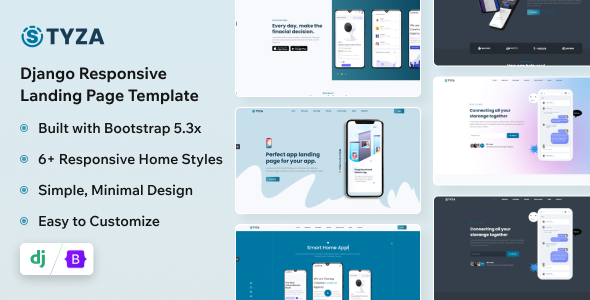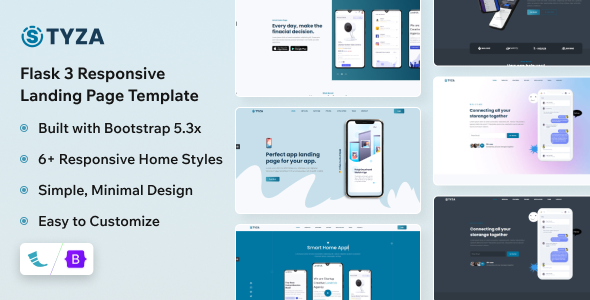
The Styza App Landing Page Flask Template is a pre-built Flask application designed to quickly launch marketing pages for apps or startups. It’s best suited for developers and agencies looking to deploy a functional, responsive app showcase template with a Python backend quickly.
Streamlining Development for a Flask App Landing Page
One of the persistent headaches in agency work is spinning up a marketing site for a new application or service quickly, especially when the main application is already built with Python and Flask. This Styza app landing page template directly addresses that by providing a ready-to-go Flask project. It saves significant time typically spent on initial setup, routing, and integrating a frontend framework, letting you focus on content and specific conversion elements rather than foundational structure.
Examining the Core Flask and Frontend Architecture
Looking at the underlying code, this template uses a standard Flask project structure, which means any developer familiar with Flask can jump in without much friction. The frontend is built with Bootstrap, ensuring a responsive layout across devices. The absence of jQuery is a welcome sign, pointing to a more modern and performant approach for handling interactive elements. This choice typically leads to smaller JavaScript bundles and better page load times, which directly benefits a business owner through improved Core Web Vitals and lower bounce rates.
- The CSS organization relies on SASS, making global style changes, like adjusting brand colors or typography, straightforward via variable files. This reduces long-term maintenance costs.
- For asset loading, the template handles images and other media through Flask's static file serving, which is standard and reliable for production deployments.
- The mobile menu behavior is a typical Bootstrap collapse, which works as expected without any custom JavaScript quirks. It provides a consistent experience for mobile users.
- The template generally adheres to semantic HTML structure, which is a good baseline for search engine optimization and accessibility.
- Integration with Google Fonts and Material Design Icons provides a flexible and common set of visual assets without needing custom solutions.
Key Strengths of the Styza Template
What stands out here is the tight integration with Flask. Many "app landing page" templates are just static HTML, requiring extra work to hook into a Python backend. Styza gives you that foundation immediately. The clean, focused design avoids the common bloat seen in many multi-purpose themes, allowing for a clearer presentation of your app's features and calls to action. It’s a solid starting point that respects modern frontend practices.
Ideal Users and Project Suitability
This template is ideal for individual developers, small agencies, or startups needing to quickly deploy a dedicated marketing site for a new app or product, especially if their existing tech stack is Python/Flask. It's particularly useful for those who value rapid deployment over deep, custom backend logic for the landing page itself. However, it’s not for projects requiring extensive server-side functionality beyond basic page rendering and static asset serving for the landing page.
Realistic Limitations and Areas for Improvement
While functional, the design feels fairly standard for a Bootstrap-based app landing page template. It doesn't push any new boundaries visually, which isn't necessarily a flaw, but it means you'll need to invest time in custom branding and imagery to make it truly distinctive. The template provides a good skeleton, but the "unique design" claim is a bit generous; it’s competent and clean, but not groundbreaking.
Final Thoughts: Is it worth it?
If you're in a position where you need to get an app's marketing presence online fast, and you're already working within the Flask ecosystem, this Styza App Landing Page Flask Template offers a genuine shortcut. It handles the initial setup and frontend integration, letting you concentrate on the content and conversion strategy. For the right project, it’s a smart investment to save significant development time.
FAQ
How easy is it to customize the styling?The template uses SASS, so primary color schemes and typography can be adjusted efficiently by modifying the SASS variables and recompiling. This is a standard and effective approach.
Does this template support dynamic content loading?Since it's a Flask application, you can easily integrate dynamic content by pulling data from a database or API within your Flask views and rendering it through Jinja2 templates.
What is the typical deployment process for a Flask app landing page template like this?Deployment would involve setting up a Python environment on a server, installing Flask and dependencies, and then configuring a WSGI server like Gunicorn or uWSGI with a reverse proxy like Nginx.