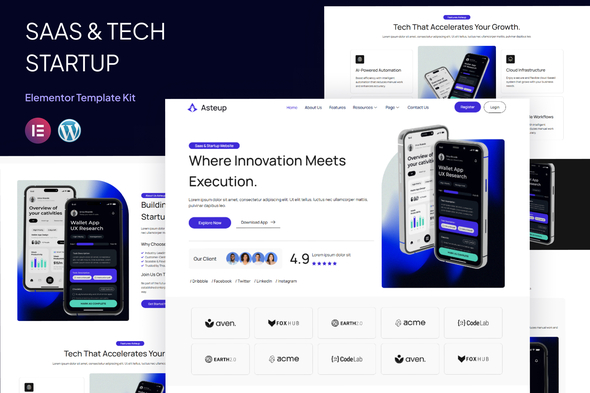
Studiox is an Elementor Template Kit designed for agencies or freelancers who need to quickly build WordPress websites for digital service providers or IT consulting firms. It provides a pre-built set of pages to speed up initial project delivery for client work.
Streamlining Digital Agency Website Development for Faster Launches
The primary workflow problem this Elementor template kit solves is the initial setup time for common business pages. When you're tasked with building a website for a digital agency or an IT solution provider, starting from a blank canvas in Elementor can still be a time sink. Studiox gives you a structurally sound starting point, effectively cutting down the hours spent on basic layout, section creation, and initial styling. This means less time on repetitive tasks and more focus on client-specific content and branding, which can significantly improve project timelines and reduce costs for agencies.
Evaluating Technical Standards and Key Features for Real-World Use
From a technical standpoint, Studiox provides a standard Elementor setup. It’s built to work with the free Hello Elementor theme, which is a good foundation for performance as it’s quite lean. The kit relies on a few Elementor add-ons like ElementsKit, Jeg Elementor Kit, and Ultimate Addons for Elementor Lite. While these extend Elementor's capabilities, their combined footprint can impact page load times if not optimized. The underlying structure appears to follow standard accessibility practices for basic elements, and the semantic structure for headings and sections is generally clean, which is beneficial for search engine optimization. In our experience with similar frameworks, this level of code organization is about market average for a template kit.
- The reliance on several third-party Elementor add-ons means added JavaScript and CSS. This often translates to a slightly larger payload, which can affect Core Web Vitals if not managed with caching and asset optimization.
- Page layouts are responsive out of the box, handling various screen sizes well. This ensures a consistent mobile experience for site visitors without extensive manual adjustments.
- The kit includes a dedicated system for headers and footers via Jeg Elementor Kit. This centralizes global elements, making easier content updates and site-wide design changes possible without editing every single page.
- Demo images are provided but require separate licensing from Envato Elements. This is a common practice, but it's an important logistical detail for lower maintenance costs to remember during project planning.
- The styling, while handled by Elementor and its add-ons, is generally well-organized within the Elementor interface. This allows for straightforward color and typography changes, which speeds up brand customization for clients.
Strengths and What Impresses About This Template Kit
What stands out is the comprehensive set of pre-built pages. You get all the essentials for a typical business website: home, about, services, projects, team, testimonials, FAQ, blog, and contact. This range covers most common client requirements for a digital agency website project. The design itself is clean and functional, adhering to current web aesthetics without being overly trendy. It’s a solid, professional look that doesn't feel dated, making it a reliable choice for various digital service niches. The straightforward page structures mean less time spent deciphering complex nested Elementor sections.
Who This Template Kit Is For (And Who Should Avoid It)
This kit is ideal for web development agencies and freelance developers who frequently build websites for clients in the IT, digital marketing, or consulting sectors and need to deliver projects efficiently. It's particularly useful for those who want a robust visual starting point and are comfortable working within the Elementor ecosystem. However, it is not for developers who require deep custom backend logic, prefer to write all CSS from scratch, or are extremely sensitive to the number of plugins used in a WordPress installation. If you are building a highly bespoke application, this template kit will likely introduce more overhead than benefit.
Acknowledging Product Limitations and Average Aspects
The main limitation here, as with many Elementor kits, is the reliance on multiple third-party plugins to achieve its feature set. While these plugins offer extended functionality, they also add to the overall page weight and potential for future maintenance headaches or conflicts. The design, while good and appropriate for the niche, doesn't offer anything particularly groundbreaking or unique; it’s a solid, market-average modern aesthetic. If I could change one thing, I would try to consolidate some of the plugin functionality into fewer, more integrated solutions to reduce the overall dependency footprint.
Final Thoughts: Is it worth it?
For agencies and freelancers needing to accelerate their WordPress website development for digital service clients, Studiox is a smart investment. It delivers a complete, well-designed foundation that saves significant upfront development time on layout and basic styling. If your workflow involves Elementor and you value speed to market for standard business sites, this kit provides tangible utility, allowing you to focus on client content and conversion-ready funnels rather than building common pages from scratch.
FAQ
Does this template kit contribute to plugin bloat?
Yes, like many Elementor kits, it relies on several third-party plugins. This can increase the overall number of active plugins on your site, which might impact performance and maintenance.
How easy is it to deeply customize the design beyond Elementor's visual builder?
Basic design changes are straightforward within Elementor. For deeper, more granular styling that goes beyond what the builder offers, you will likely need to write custom CSS to override the plugin-generated styles.
What about the performance and page load speeds?
Out of the box, the performance will be standard for an Elementor site with multiple add-ons. You will need proper caching, image optimization, and potentially asset optimization plugins to achieve optimal Core Web Vitals scores.
Is this suitable for a large-scale website with many pages?
For a typical business website with 10-30 pages, it works well. For very large-scale sites with thousands of pages or complex custom post types, you might find the Elementor-based structure less efficient for long-term management compared to a custom-coded solution.