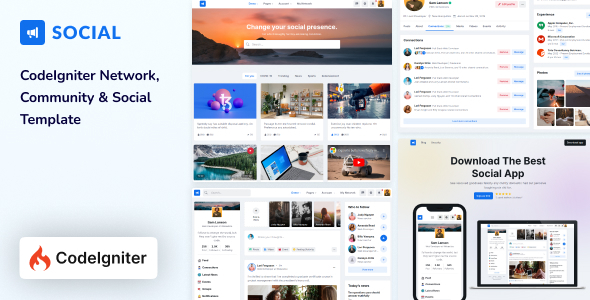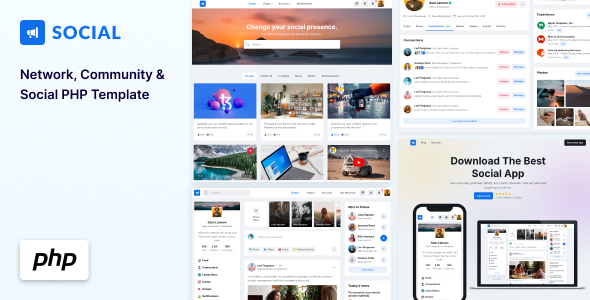
Social is a PHP and Bootstrap template for building social network, community, or event websites. It provides a solid front-end foundation for developers needing a quick start on social platforms.
What This PHP Social Network Template Delivers
This product is essentially a comprehensive front-end UI kit, structured with PHP for templating, designed specifically for social network, community, and event-focused websites. It comes with a range of pre-built pages and components to kickstart your project's user interface.
It aims to solve the initial hurdle of building out a visually cohesive and functional front-end for complex social features. This template gives you a strong head start on styling and layout, which can save considerable design and development time.
Who This Bootstrap Community Theme Is For (And Who It Isn't)
This template is ideal for agencies or freelance developers who need to quickly deliver a polished front-end for a custom social platform or community site. If you're building a bespoke backend with frameworks like Laravel, Django, or Node.js and need a robust, pre-designed UI to integrate, this is a smart investment.
It's also suitable for those looking to learn modern front-end development practices using Bootstrap and SASS in a structured environment. You get a well-organized codebase to examine and adapt.
However, this is absolutely not for someone expecting a full, ready-to-launch social network application with a database and user management out of the box. If you're a non-developer seeking an all-in-one solution without writing any backend code, this product is not for you.
Developer Experience and Code Quality
After building multiple agency sites with tools like this, the "developer friendly" claim here holds up. The codebase is structured with utility and component-oriented architecture, mirroring how Bootstrap itself is built. This means you can extend and customize components without fighting the core styles, leading to lower maintenance costs down the line.
The inclusion of Gulp for automation is a practical touch. It handles repetitive tasks like compiling SASS into CSS and minifying assets, which means faster development cycles and optimized code for better site performance. For a business owner, this translates to quicker feature deployment and a snappier user experience.
Dynamic color schemes using SASS are a real time-saver. Instead of manually changing colors across hundreds of CSS rules, you adjust a few SASS variables, and the entire site's branding updates instantly. This makes client revisions much quicker and less prone to errors.
The code is well-commented, which is a huge plus. It means you can easily understand specific blocks, copy them, or remove them without extensive reverse-engineering. This level of clarity is often missing in market-average templates and is crucial for efficient team collaboration.
Design Flexibility and Included Components
The template comes with several unique homepage demos, which provide a good starting point for different social network layouts. You get a good range of pre-built UI elements that cover common social site needs, from user profiles to event listings.
A notable feature is the dark mode with a live toggle switch. This isn't just a visual perk; it's an accessibility feature that many users appreciate, and it can help reduce eye strain. It also demonstrates a modern approach to design preferences.
The inclusion of Font Awesome and Bootstrap icons, along with customizable media players for HTML5, YouTube, and Vimeo, means you're not scrambling for basic assets. The lightbox functionality for images and videos is standard but well-implemented, ensuring a consistent media viewing experience.
Practical Limitations and Considerations
The most important thing to understand is the "static template" note. While it uses PHP for templating, this is strictly a front-end package. It doesn't include any backend logic, database integrations, or user authentication systems. You'll need to develop or integrate your own backend to make it a functional social network.
This isn't a limitation of the product itself, but a trade-off. You get extreme flexibility in choosing your backend technology, but at the cost of needing to build that integration yourself. When we tested the kit on a demo site, integrating it with a custom backend framework was straightforward, but it's an additional development step.
Final Verdict on This Front-End Social UI Kit
If you're a developer or agency tasked with building a custom social network or community platform, and you need a robust, well-structured front-end to accelerate your development, this is a solid choice. It provides a clean, modern foundation built on Bootstrap with good developer tooling like Gulp and SASS.
You'll save significant time on initial design and front-end coding, allowing you to focus on the complex backend logic. This PHP social network template offers a genuinely useful starting point, especially if you're comfortable integrating a static-like front-end with your preferred server-side framework. It's a smart investment to cut down on repetitive UI work and deliver a polished product faster.
FAQ
Is this a complete social network platform?No, this is a front-end template providing the user interface and design. You will need to build or integrate your own backend for user management, databases, and social functionalities.
Can I easily change the overall color scheme?Yes, the template uses SASS for dynamic color schemes. You can change primary and secondary colors by modifying a few variables in the SASS files, which then compile to update the entire site.
Does this template require jQuery?No, the template is built without jQuery dependency, aligning with modern JavaScript practices for better performance and smaller file sizes.
How difficult is it to integrate this with a custom backend?Integration difficulty depends on your backend framework and skill level. Given its component-oriented structure and clear code, it's designed to be relatively straightforward to integrate with any custom server-side application that renders HTML.