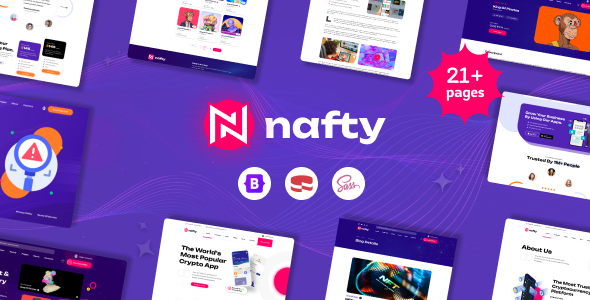
Nafty: A CakePHP template for crypto and NFT sites. Includes 3 homepages, responsive design, and Bootstrap. Good for startups and marketplaces needing a quick, themed frontend.
Nafty: A CakePHP Template for Crypto and NFT Projects
This is Nafty, a template built for anyone needing to get a crypto or NFT website up and running quickly. It's based on CakePHP and Bootstrap, which means you get a solid backend framework and a flexible frontend. If you're building an NFT marketplace, a blockchain startup site, or anything in that niche, this template provides a pre-built structure.
Who This Nafty Template is For (and Who Should Look Elsewhere)
Nafty is a good fit for developers or agencies who are already working with CakePHP and need a specific look for crypto or NFT projects. It’s designed to save time on frontend styling and basic page layouts for these niches. If you're familiar with CakePHP and just need a themed frontend, this could be a smart shortcut.
However, if you're not using CakePHP, this template won't be directly applicable. It's also not for developers who need to build complex, custom backend logic from scratch or require a highly unique, bespoke frontend design. This is a template, not a full-fledged application framework.
Solving the Crypto/NFT Website Launch Headache
The main problem Nafty solves is the time sink involved in creating a visually appropriate and functionally structured website for the crypto and NFT space. Building out pages like pricing, services, or a blog with a consistent, niche-specific aesthetic can take days of work on styling alone. This template gives you those pages pre-designed and ready to go.
For those looking to build an NFT marketplace website quickly, this template offers a significant head start. It handles the visual presentation of digital assets and related information, allowing you to focus on the core functionality of your platform rather than the boilerplate design. It's about reducing the grunt work of frontend development for a specific industry.
Layouts and Pre-Built Pages
Nafty comes with three distinct homepage designs, giving you a few options to start with. Beyond that, it includes standard pages you'd expect for a business or project site, such as About, Services, Pricing, and Blog sections. These are designed to be adaptable, but they provide a solid foundation.
The inclusion of these pre-built pages means you're not starting from a blank canvas. This is particularly helpful when aiming to launch a crypto service website or an NFT project showcase without extensive design time.
eCommerce and Business-Related Features
While Nafty is geared towards crypto and NFT platforms, it doesn't appear to include specific eCommerce functionalities like a full shopping cart or checkout system out-of-the-box. Its focus is more on presenting information about projects, services, and NFTs. If your primary need is a direct sales platform, you'll likely need to integrate additional eCommerce components.
Code Quality and Developer Experience
The template is built with CakePHP and Bootstrap. This means the backend will follow CakePHP's MVC structure, which is generally well-regarded for its organization and development speed. The frontend code is described as W3C validated and well-commented. In practice, this usually translates to cleaner code that's easier to debug and modify compared to some less structured templates.
The use of Bootstrap provides a familiar and efficient way to handle responsive design and component styling. For developers accustomed to Bootstrap, this makes customization straightforward. The documentation is mentioned as being detailed with screenshots, which is a good sign for ease of setup and modification.
Responsiveness and Compatibility
Nafty is built to be fully responsive, meaning it should adapt well to different screen sizes, from desktops to mobile phones. This is standard practice for modern web templates, and it's crucial for user experience, especially in the fast-paced crypto and NFT space where users access information on various devices. The template has also been tested on real devices, which is a good indicator of its practical usability.
SEO Readiness
The template is built with W3C validated files, which is a positive step for technical SEO. Clean HTML and CSS structure generally contribute to better search engine crawlability and indexing. While the template itself won't guarantee high rankings, a solid semantic structure is a good starting point for any website aiming for organic visibility, especially for terms like "buy NFT platform template."
A Realistic Look at Nafty
Nafty offers a practical way to get a themed frontend for CakePHP-based crypto and NFT projects. It’s not trying to be a do-it-all solution, but rather a focused template that saves time on common design elements for its niche. The biggest advantage is the pre-built structure for specific pages, which can shave hours off development time.
One area where it feels a bit standard is the lack of advanced, niche-specific features beyond the visual theme. For instance, a truly advanced NFT marketplace might require more complex filtering or user profile management features, which would need custom development on top of this template. However, for a project launch or informational site, it's a solid choice.
FAQ
Is Nafty suitable for beginners with no CakePHP experience?
No, Nafty is designed for developers already familiar with CakePHP. You will need a working knowledge of the framework to implement and customize it effectively.
Can Nafty be used for a general business website, not just crypto/NFT?
While you could technically adapt it, the design and page structures are heavily themed for the crypto and NFT niche. It would likely require significant customization to fit a different industry.
Are images included with the Nafty template download?
No, the images shown in the demo are not included in the download package. You will need to source your own images.
Does Nafty include a content management system for non-developers?
Nafty is a frontend template built on CakePHP. It does not include a separate CMS interface for non-developers to manage content; content management would be handled through the CakePHP application's backend.