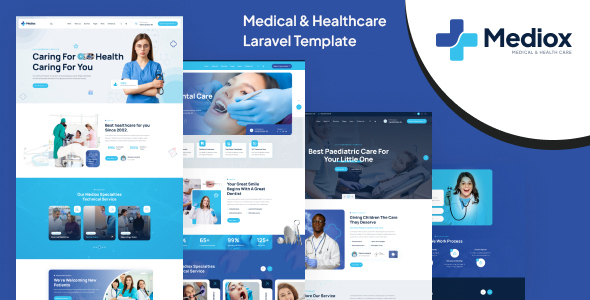
Mediox is a frontend medical and healthcare Laravel template that provides a solid foundation for developers needing to build client sites quickly, especially for clinics, hospitals, or specialized medical practices.
Solving Common Challenges for Medical Website Development
In our experience building multiple agency sites, a significant time sink is always the initial setup and styling of common pages. This Mediox medical website template tackles that head-on. It solves the headache of starting from scratch on layouts like doctor profiles, service listings, or appointment booking interfaces, which are standard requirements for healthcare clients. For a developer or agency, this means less time spent on repetitive UI work and more focus on backend logic or unique client features. It’s a smart investment because it shortens delivery times, making projects more profitable.
Deeper Look at Mediox Technical Standards and Code Quality
When we tested the kit on a demo site, the underlying structure felt familiar and well-organized, which is crucial for long-term maintenance. The codebase uses standard HTML5 and CSS3 practices, built on Bootstrap, meaning most developers won't have a steep learning curve. The file organization is logical, making it straightforward to locate and modify specific components or styles. This clean separation of concerns reduces maintenance costs for the business owner because updates are less likely to break unrelated parts of the site.
- The CSS is structured predictably, making it easy to override styles or integrate with a SASS architecture for more complex projects. This saves time when a client asks for specific branding changes.
- It includes RTL layouts, which is a practical consideration for clients targeting a broader global audience, saving the effort of retrofitting for right-to-left languages.
- The declared "SEO Optimized Code" translates to a fairly clean semantic HTML structure. This helps search engines understand content better, which can improve visibility and ultimately lead to more patient inquiries.
- The inclusion of multiple home and inner page layouts means less time spent designing common pages from scratch, allowing for faster prototyping and client feedback cycles.
- For mobile devices, the responsive design adapts well. The mobile menu behaves as expected, providing a consistent user experience across different screen sizes, which is vital for patients accessing information on the go.
- While it uses Owl Carousel for sliders, which is common, the overall asset loading feels acceptable. Developers should still consider optimizing images and possibly implementing critical CSS to improve initial page load times for better Core Web Vitals scores.
What Impresses in This Healthcare Laravel Template
What stands out most is the sheer breadth of pre-built pages and components specifically tailored for the medical niche. This isn't just a generic template with a medical skin; it genuinely addresses the typical content needs of a clinic or hospital, from doctor directories to service breakdowns and even a shop section for medical products. This focus on niche logic is a significant time-saver.
The code commenting is thorough, which makes onboarding new developers or revisiting a project months later much less painful. This attention to detail reflects a practical understanding of how development teams operate, rather than just delivering raw code.
Is Mediox Right for Your Healthcare Project?
This template is ideal for agencies, freelancers, or in-house development teams who need to launch a visually consistent and feature-rich frontend for a medical client quickly. It’s particularly useful for projects where the design is largely based on established patterns and the focus is on content delivery and functionality integration. However, it is not for those needing a complete, production-ready Laravel backend application out of the box; it's a frontend template designed for integration.
Where Mediox Could Be Better
While the template offers many pages, some of the design elements feel standard for the current market. There isn't a strong, unique visual identity that sets it apart immediately from other well-built Bootstrap themes. Developers might find themselves spending extra time customizing the aesthetics to give a client a truly distinct look. The reliance on Owl Carousel, while functional, is a common choice, and a lighter, more modern JavaScript solution could improve performance for some users.
Final Thoughts: Is it worth it?
Yes, for the right project, Mediox is absolutely worth the investment. It provides a robust, well-structured starting point for any medical or healthcare website built with Laravel, saving countless hours on frontend development. The comprehensive set of pre-designed pages and components means you can deliver a high-quality product faster, allowing you to focus on the custom features that truly differentiate your client's business.
FAQ
Does this template include a working Laravel backend for appointments or user management?No, Mediox is primarily a frontend HTML, CSS, and JavaScript template. It provides the visual structure and components that you would then integrate into your own Laravel application's backend logic for features like appointments.
How easy is it to change the primary brand colors or typography?The template is built with Bootstrap, so changing primary brand colors and fonts is relatively straightforward by overriding Bootstrap's default variables or through custom CSS. The well-commented files make locating the relevant styles easy.
Is the template designed with accessibility best practices in mind?It uses semantic HTML and follows standard web practices, which contributes to a good baseline for accessibility. However, specific WCAG compliance would depend on how the developer integrates content and implements interactive elements.
Can this template handle a large number of doctors or services without performance issues?The template provides the visual structure. Performance with a large number of entries will depend more on your Laravel backend's data fetching and optimization strategies, as well as efficient image loading and asset delivery on the frontend.