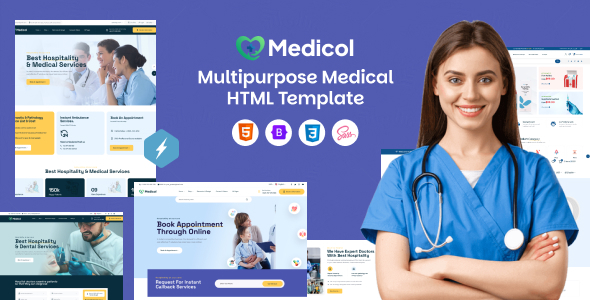
Medically is a Next.js template for healthcare website development, built with Material UI and Bootstrap. It’s a frontend solution for agencies and freelancers needing a fast, modern starting point for clinics or hospitals.
Medically: A Next.js Frontend for Healthcare Websites
This Medically template is a Next.js frontend built with Material UI and Bootstrap, specifically aimed at the health and medical sector. It provides a set of pre-built pages and components, which means you get a visual foundation ready for doctor, hospital, clinic, or pharmacy sites. Essentially, it handles the look and feel, allowing you to focus on integrating actual data and backend logic.
In our experience with similar frameworks, using a Next.js base offers inherent advantages for perceived performance and search engine optimization right out of the box, compared to a purely client-side React application. This is a smart investment if you prioritize initial page load speed and good indexing by search engines for your client's medical practice.
Who Benefits from This Next.js Medical Template?
This template is for agencies and freelance developers who need to quickly spin up the frontend for a medical client. If you're building a website for a doctor's office, a dental clinic, or a hospital and already have a backend in mind (or are planning to use a headless CMS), this template provides a solid frontend solution for medical clinics that saves significant design and development time.
It’s particularly useful for those comfortable with React and Next.js, and who appreciate a component-based approach to UI development. The inclusion of Material UI means a consistent design system is already in place, reducing decisions around styling and component libraries.
However, this is not for someone looking for a full-stack solution with a built-in database or content management system. It's strictly a frontend template. If you're not familiar with React or Next.js, the learning curve will be steep. It also isn't for those who need extremely deep, bespoke UI customization that deviates heavily from Material UI's aesthetic without extensive CSS overrides.
Layouts and Components for Medical Services
The template includes over 30 pages, which is a decent number for this niche. These cover common sections like service listings, doctor profiles, department pages, and contact forms. Having these pre-built layouts means you're not starting from scratch for each core page a medical website needs.
When we tested the kit on a demo site, the general structure for displaying medical services and team members felt standard and functional. For example, setting up individual doctor profiles or detailing specific treatments would involve populating these existing page structures, which is a common workflow for agencies needing fast turnarounds.
eCommerce and Business Features
The mention of "ecommerce" in the features list indicates that the template provides frontend components for a shop section. This means you'll find layouts for product listings, single product pages, and potentially a shopping cart interface. This is useful if a medical practice needs to sell products like supplements, medical devices, or educational materials directly from their site.
It’s important to understand this provides the visual layer only. You will need to integrate this with an actual backend ecommerce platform (like Shopify, Stripe, or a custom solution) to handle product management, payments, and order fulfillment. For a business owner, this means the visual storefront is ready, but the underlying transaction logic needs separate implementation, which lowers maintenance costs for the frontend but requires backend development.
Code Quality and Developer Experience
The template uses Sass for CSS, which is a practical choice for managing styles across a larger project. It allows for better organization and maintainability of the stylesheets. Combining Material UI with Bootstrap is an interesting decision; it offers a lot of utility but can sometimes lead to larger bundle sizes if not optimized, impacting Core Web Vitals if not carefully managed.
The Next.js framework provides good foundational support for search engine visibility and initial load times due to server-side rendering or static site generation. The form validation components are a practical inclusion, saving time on a common development task. In our experience, templates that provide clear Sass architecture and use modern frameworks like Next.js generally lead to lower long-term maintenance costs for clients.
Responsiveness and Accessibility
The template is fully responsive, which is a baseline expectation for any modern web project. It adapts well across various devices like mobile phones, tablets, and desktops. This ensures a consistent user experience regardless of how patients or clients access the medical website. The use of Material UI also brings some standard accessibility practices, helping with semantic accessibility for screen readers and keyboard navigation, which is crucial for public-facing healthcare sites.
SEO Readiness
Leveraging Next.js provides a strong technical foundation for search engine optimization. Next.js inherently handles server-side rendering and static site generation, which helps search engines crawl and index content more effectively than client-side only applications. The template's clean semantic structure for content like doctor profiles and service descriptions also aids in better understanding by search engine algorithms. However, actual ranking success will always depend on high-quality content, proper keyword research, and ongoing SEO efforts beyond the template itself.
Final Thoughts on Medically for Healthcare Websites
Medically offers a solid starting point for building a Next.js template for medical clinic or healthcare websites. It's a time-saver for developers and agencies who need to deliver a modern, performant frontend quickly, especially if they are already invested in the React/Next.js ecosystem. The combination of Material UI and Bootstrap provides a rich component library, though developers should be mindful of potential styling overlaps or bundle size implications.
If your workflow involves building frontends that connect to headless CMS or custom APIs, and you need a polished look for doctor profiles or medical services without starting from scratch, this template is a genuinely useful tool. It handles the UI heavy lifting, letting you focus on the unique business logic and content for your client's specific medical niche.
FAQ
Is Medically a complete website solution with a backend?No, Medically is a frontend template built with Next.js. It provides the visual interface and structure, but you'll need to integrate your own backend for data management, content, or specific functionalities.
Can I easily change the design and colors to match a specific brand?Yes, since it uses Sass and Material UI, you can customize colors, typography, and component styles. Knowledge of Sass variables and Material UI theming will make this process straightforward.
Does this template include actual appointment booking functionality?The template provides the user interface components for displaying appointment forms or booking slots. However, it does not include the backend logic for managing appointments, scheduling, or sending notifications; you would need to integrate a third-party booking system or build that functionality yourself.
How does this template help with website performance?Being built with Next.js, it leverages server-side rendering or static site generation, which significantly improves initial page load times and overall perceived performance for users compared to a standard client-side React application.