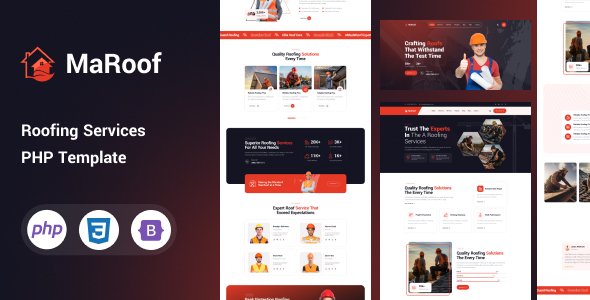
Maroof is a static PHP/HTML template for roofing and construction services, offering 4 homepages and 20+ pages. It's built on Bootstrap for agencies and freelancers needing quick site launches.
Maroof: A Solid Foundation for Roofing Service Websites
This isn't a WordPress theme; it's a straightforward PHP/HTML template designed specifically for roofing services and general construction companies. It gives you a pre-built structure to get a client's online presence up fast, especially if they don't need a complex content management system. For agencies building a specialized roofing website, this can cut down initial setup time significantly.
Who Maroof is Built For (And Who Should Skip It)
If you're an agency or a freelance developer tasked with building a marketing site for a local roofer or a general contractor, this template provides a head start. It's ideal for projects where the client needs a professional online presence quickly and doesn't require a full CMS. It's also a good pick if you're comfortable integrating your own PHP logic for forms or dynamic content.
However, if your client expects a full content management system or you're not comfortable working with raw HTML, CSS, and PHP files, this isn't for you. This is a frontend starter kit, not a plug-and-play WordPress solution for a roofing contractor website.
Design and Aesthetics for a Roofing Company Website
The design here is clean and follows a pretty standard modern web aesthetic. It uses Bootstrap as its base, which means you get a familiar grid system and components. The styling is generally flat and uncluttered, which works well for service-based businesses like roofing contractors who need to convey professionalism without a lot of visual noise.
It includes some subtle animations, which are common but not overdone, keeping the user experience smooth. The "retina ready" claim is standard for modern templates, ensuring crisp display on high-resolution screens across various devices.
Exploring the Maroof Template Layouts and Pages
You get four distinct homepage variations, which is decent for a template in this niche. This gives you a few different starting points for how you want to present the main services and calls to action. Beyond the homepages, there are over 20 additional pages.
These likely cover standard service pages, about us, contact, and perhaps a gallery or project showcase, which is exactly what a roofing business needs. This breadth of pages means less time spent building common internal layouts from scratch, helping you launch a dedicated roofing services template faster.
Business-Focused Features for Service Providers
This template is built for service businesses, specifically roofing and construction. It integrates Google Maps, which is crucial for local businesses wanting to show their service area or office location. While it's a static template, the structure is set up to easily showcase different roofing services, project portfolios, and team members.
The PHP files suggest it's ready for server-side form handling, though you'd need to implement the actual backend logic for sending emails or storing data. This focus on essential business sections makes it a practical choice for a roofing company website template.
Developer Experience and Code Structure for Maroof
This template uses Bootstrap, which is a common and well-understood framework. The inclusion of SASS for CSS is a plus; it makes styling changes more organized and efficient compared to digging through raw CSS files. The code is described as clean and commented, which is always a relief when you inherit a template.
In our experience, well-commented code drastically reduces the time needed for customization and maintenance, meaning lower long-term costs for the client. The W3C valid code claim suggests a basic level of adherence to web standards, which is good for general browser compatibility and future-proofing.
Maroof's Responsiveness and Browser Support
The template is fully responsive and touch-friendly, which is a baseline expectation for any modern web project. This means the site should look and function correctly on various devices, from desktops to mobile phones, improving the user experience for potential customers on the go. This is critical for any modern roofing website template.
It claims compatibility with all modern browsers, including older versions like IE 11, which is useful if your client's audience still uses legacy systems, though most modern projects have dropped IE support. This broad compatibility helps ensure a consistent experience for a wider audience.
Technical SEO Considerations for Roofing Websites
The "SEO on-page optimized" claim usually means the basic HTML structure is semantic and headings are used correctly, which is a good start. A clean code base, as described, helps search engine crawlers understand content efficiently. While a static template won't handle advanced SEO features like dynamic sitemaps or schema markup out of the box, it provides a solid foundation for on-page optimization.
For a roofing contractor website, having a well-structured site is crucial for local search rankings. The lean nature of a static template also generally contributes to better Core Web Vitals scores compared to heavier CMS solutions.
Final Thoughts: Is Maroof the Right Template for Your Next Project?
For a developer or agency looking to quickly deploy a professional marketing site for a roofing or construction business, Maroof offers a solid, well-structured starting point. It's not a CMS, so don't expect a WordPress-like experience, but that's also its strength: less bloat and more control for those who know their way around code. The SASS integration and clean code make customization manageable.
If you need a dedicated roofing services template that prioritizes speed and straightforward implementation over complex backend features, this template could save you a significant amount of development time on the frontend. It's a practical choice for getting a client online fast with a good-looking, standards-compliant site.
FAQ
Is Maroof a WordPress theme?No, Maroof is a static PHP/HTML template. It is not designed to be installed on WordPress or any other content management system.
Can I easily customize the template's colors and fonts?Yes, since it includes SASS CSS files, you can manage and change the styling, including colors and typography, more efficiently than with raw CSS.
Does this template include any backend functionality for forms or bookings?Maroof provides the frontend structure for forms, but it does not include pre-built backend logic for sending emails, managing bookings, or storing data. You would need to implement that yourself.
How do I update the website content after it's launched?Content updates require direct editing of the HTML files. This template does not come with a user-friendly content management interface.