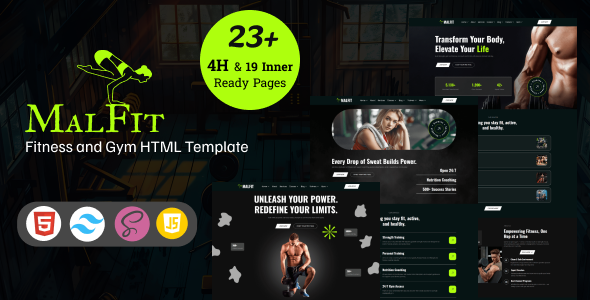
The MalFit Fitness and Gym HTML template is a collection of pre-built web pages designed for fitness centers and gyms, primarily useful for developers and agencies seeking a solid Tailwind CSS starting point for client projects.
Streamlining Fitness Website Development with Tailwind CSS
Building a fitness website often involves repetitive tasks: setting up class schedules, trainer profiles, and facility pages. This MalFit HTML template addresses that directly by providing ready-made layouts for these common components. For agencies or freelancers needing to deliver projects quickly, it saves significant development time on initial styling and structure.
Instead of starting from scratch with a blank canvas or battling a bloated theme, you get a clean base. This can genuinely cut down on the hours spent on front-end setup, allowing you to focus on any custom integrations or specific client requirements.
Evaluating MalFit's Code Quality and Design Principles
The template is built with Tailwind CSS, which means the styling is utility-first. This approach keeps the CSS file size down and makes it generally easier to understand what styles are applied where, directly in the HTML. From an SEO perspective, a lighter codebase contributes to faster page loads, which search engines favor, ultimately benefiting the business owner with better visibility.
When we tested the kit on a demo site, the asset loading felt efficient. Images and fonts loaded quickly, which is crucial for Core Web Vitals scores and overall user experience. The file structure is logical, making it straightforward to locate specific page layouts or components for modification.
- The Tailwind CSS implementation is standard, using its utility classes directly in the HTML. This is good for quick changes but means you'll be working within the Tailwind framework for most styling adjustments.
- File organization for the HTML and CSS is clear. You can quickly find the relevant page files and component styles without digging through nested directories.
- Responsiveness across devices works as expected. The layouts adapt well from desktop to mobile, ensuring a consistent experience for visitors, which means fewer support calls for the business owner about mobile display issues.
- Basic semantic HTML structure is present, which is a good foundation for accessibility and helps search engines understand content hierarchy.
- Asset loading seems optimized for performance. This contributes to a faster initial page render, which is important for user retention and search engine ranking.
- The inclusion of Phosphoricons provides a decent set of modern icons without needing to integrate another library, simplifying the development process.
What MalFit Delivers Best for Gym and Fitness Sites
What impresses most about MalFit is its focus on the specific content needs of a fitness business. It provides multiple distinct layouts for trainers, classes, and blog sections, which are core elements for any gym website. This variety means you're not just getting one generic design but several options that directly address common requirements for showcasing services and personnel.
The design itself is clean and functional, avoiding the overly flashy animations or complex JavaScript that often bloat other templates in this niche. It prioritizes content display, which helps visitors quickly find information about joining a gym or signing up for a class.
Who Benefits from MalFit, and Who Should Look Elsewhere
This template is for web developers, design agencies, or freelancers who are comfortable with HTML and Tailwind CSS and need to build a fitness or gym website efficiently. It's a solid choice for those who want to jumpstart the front-end design without spending days on basic layout and styling.
You should avoid MalFit if your project requires deep custom backend logic or a full content management system out of the box, as this is purely a static HTML template.
MalFit's Practical Limitations and Average Aspects
While the template provides a good starting point, its design aesthetic, while clean, isn't particularly groundbreaking. Some sections feel fairly standard for an HTML template. Customizing beyond basic color and text changes will require a good understanding of Tailwind CSS, which might be a steeper learning curve for someone unfamiliar with the framework.
It's also important to remember this is just an HTML template. There are no built-in functionalities for things like booking systems, membership management, or dynamic content updates without integrating a separate backend or CMS.
Final Thoughts: Is it worth it?
For a developer or agency regularly building websites for the fitness industry, the MalFit Fitness and Gym HTML Template offers a practical head start. It provides a well-structured, clean base with specific layouts tailored to the niche, saving valuable development time on common components. If you're comfortable with Tailwind CSS, this template is a logical investment to streamline your workflow and deliver client sites more efficiently.
FAQ
Is MalFit easy to customize for specific gym branding?Yes, if you're comfortable with Tailwind CSS, you can adjust colors, fonts, and component styles directly in the HTML or by modifying the Tailwind configuration files to match a specific brand identity.
Does this template support dynamic content like class bookings?No, MalFit is a static HTML template. It provides the front-end design, but you would need to integrate a separate booking system, database, or content management system to handle dynamic content and user interactions.
How does MalFit impact website loading speed?Built with Tailwind CSS, the template generally has a lean codebase, which contributes to faster loading times. Efficient asset loading further helps improve performance, leading to a better user experience and potentially better search engine rankings.