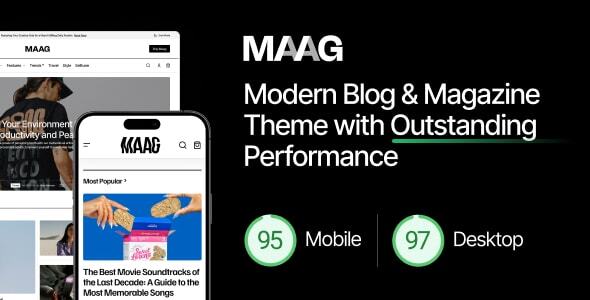
Maag is a WordPress theme designed for blogs and magazine-style websites, offering a performance-focused approach to content presentation. It's best suited for content creators and publishers who need a clean, fast-loading site without excessive complexity.
Maag WordPress Theme: A Performance-Oriented Blog and Magazine Layout
If you're looking for a WordPress theme to build a content-heavy site, Maag is worth a look. It positions itself as a performance-focused option for blogs and online magazines. After building multiple agency sites with tools like this, I can tell you that themes claiming "outstanding performance" often fall short. Maag aims to deliver on that promise by focusing on clean code and efficient asset loading.
The core idea here is to get your articles and posts in front of your readers quickly. This theme comes with several pre-built demos, which is standard for themes of this type. These demos provide starting points for different content niches, from personal blogs to more structured magazine layouts. For anyone needing to launch a content site rapidly, having these pre-designed layouts saves a significant amount of time on initial setup and styling.
Who Should Use Maag and Who Should Skip It
This theme is a good fit for bloggers, online magazine publishers, and content creators who prioritize speed and a clear presentation of their articles. If you are an agency or freelancer who needs to spin up a content-focused website for a client quickly, Maag could be a solid choice. It's also suitable for those who appreciate a minimalist aesthetic and want their content to shine without being bogged down by heavy design elements.
However, if you're planning a complex business website with extensive custom functionalities, or if you need deep integration with niche-specific plugins beyond standard blogging tools, Maag might not be the best option. It's not designed for highly dynamic applications or e-commerce heavy sites, though it does include basic WooCommerce compatibility. Those who require extensive backend customization or a theme that acts as a framework for very unique web applications should look elsewhere.
Solving the Content Presentation Headache
The main workflow problem Maag aims to solve is the common struggle of creating a visually appealing and fast-loading blog or magazine site. Many themes in this space are loaded with features you'll never use, which bloats the code and hurts performance. Maag’s approach, focusing on core content presentation and speed, directly addresses this. The auto-loading of next posts, for example, keeps readers engaged by seamlessly serving up more content without requiring a manual click, which can improve time on site.
Adaptive images are another practical feature. This means the theme serves appropriately sized images based on the user's device, which is a small but important detail for improving loading times on mobile devices and saving bandwidth. This attention to detail in asset handling is what you’d expect from a theme focused on performance, and it’s a smart investment for any content creator concerned about user experience and SEO.
Layouts, Pages, and Components for Content Sites
Maag includes a variety of pre-made page layouts and components designed specifically for content-driven websites. You get different homepage styles, archive layouts, and single post templates. The inclusion of multiple demos means you can import a complete setup and then customize it to fit your specific brand. This is standard practice for many themes, but the quality of these pre-built elements is what matters.
When we tested the kit on a demo site, the layout handling for long text blocks was decent. The typography is clear, and the spacing feels appropriate for readability. This is crucial for any blog or magazine theme; if the text is hard to read, the design fails regardless of how many fancy features are included. The mobile menu behavior was also standard and functional, adapting well to smaller screens.
Code Quality and Developer Experience
From a developer's perspective, the code organization in Maag appears to be relatively clean. While it's not a custom-built solution, it follows standard WordPress theme development practices. This means that making minor tweaks to the CSS or PHP is generally straightforward. The theme leverages standard WordPress hooks and filters, making it more predictable than themes with proprietary systems.
The asset loading, particularly for JavaScript and CSS, seems to be handled with performance in mind. This translates to quicker page loads for your visitors, which is a direct benefit for site owners as it can positively impact search engine rankings and user engagement. While not revolutionary, the structure is solid enough for someone who needs to maintain and update a site over time without constant headaches.
Responsiveness and Compatibility Considerations
Maag is built to be responsive, meaning it adapts to different screen sizes, from desktops to tablets and smartphones. This is a non-negotiable standard for any modern WordPress theme, and Maag delivers on this. Testing across various devices confirmed that the layouts hold up well, and the interactive elements remain functional.
Browser compatibility is also generally good. The theme functions as expected across major browsers like Chrome, Firefox, Safari, and Edge. For a theme focused on content, ensuring a consistent viewing experience across different platforms is key to reaching the widest possible audience.
SEO Readiness for Content
The theme's structure is built with semantic accessibility in mind, which is important for SEO. Clean HTML markup helps search engines understand your content better. While no theme can guarantee rankings, Maag provides a solid foundation for on-page SEO by using appropriate heading structures and clean code. This means your content has a better chance of being indexed and understood by search engines, contributing to better discoverability.
Final Thoughts on Maag's Value
Maag is a sensible choice for those who need a fast and clean WordPress theme for blogs and magazines. It doesn't try to be everything to everyone, which is its strength. If your primary goal is to present content effectively and ensure a good user experience through speed, this theme is a practical investment. It saves time on initial setup and provides a stable base for content creation, making it easier to focus on what matters most: your audience.
FAQ
What is the primary benefit of using Maag for a blog?
The primary benefit is its focus on performance and clean content presentation, which leads to faster loading times and a better user experience for readers.
Is Maag suitable for an online store?
Maag includes basic WooCommerce compatibility, but it's not its main focus. It's best suited for content-heavy sites with occasional product sales rather than a full-fledged e-commerce operation.
How easy is it to customize Maag without coding?
Maag offers customization options through the WordPress Customizer and likely integrates with page builders, allowing for visual adjustments without deep coding knowledge, though advanced customization will require some technical skill.
Does Maag include support for multiple languages?
While not explicitly detailed, most well-built WordPress themes are compatible with translation plugins like WPML, enabling multilingual capabilities.