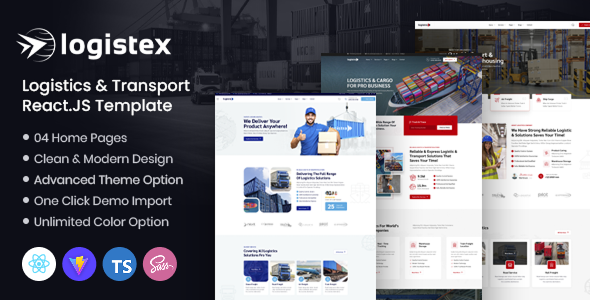
Logistex: a ReactJS template for transport and logistics websites. It delivers 4 homepages, 17+ inner pages, and Bootstrap with SCSS for quick project launches.
Reviewing the Logistex ReactJS Transport Template
This isn't a full application, but a frontend UI kit built with ReactJS, TypeScript, and Bootstrap. It’s clearly aimed at the transport and logistics niche, providing a set of pre-built pages and components. Think of it as a well-structured visual foundation rather than a complete, ready-to-deploy website with backend logic.
The template focuses on providing a clean, flat design, which is a common request in this industry. It's an asset for developers who need to quickly stand up a presentable interface for a client in the cargo, shipping, or warehousing sectors without starting from scratch.
Who Benefits from Logistex and Who Should Skip It
Logistex is genuinely useful for agencies and freelance developers who need to deliver a frontend solution for shipping companies or other logistics clients on a tight deadline. If your workflow involves integrating a custom backend with a pre-designed React frontend, this template can save a lot of initial design and layout time. It's particularly good for those comfortable with React and Bootstrap, allowing for faster modifications and extensions.
However, if you are a beginner looking for a drag-and-drop solution or a non-developer expecting a full-stack website, this isn't for you. It also isn't ideal for projects requiring extremely unique design elements that deviate heavily from the provided structure, as significant customization would effectively mean rebuilding parts of it. This is a developer-friendly React UI kit, not a plug-and-play website builder.
Design Approach and Layout Structure
The template offers 4 distinct homepages and 17+ inner pages, which is a decent starting point for various logistics services. The design is clean and modern, leaning into the flat aesthetic that's prevalent today. While not groundbreakingly unique, it's a solid, professional look that instills trust — crucial for businesses handling valuable cargo.
From a practical standpoint, the layouts are straightforward. They focus on presenting services, company information, and contact details clearly. The mobile experience is robust, with touch-friendly navigation that works well across devices. This responsiveness is standard but well-executed here, ensuring a consistent user experience for clients' customers on any screen size.
Core Features for Logistics Websites
This template provides the necessary frontend layouts for common logistics website needs. You get sections for service listings, about us, team pages, and contact forms (though the forms themselves would need backend integration). The inclusion of blog pages is also standard and useful for content marketing, helping clients build authority in their niche.
The strength here is in providing a visual framework for these elements, allowing developers to focus on the actual functionality or backend integration rather than spending hours on basic styling and layout. It saves the headache of setting up a niche-specific booking or quote request flow from scratch, at least on the frontend.
Developer Experience and Code Quality
After building multiple agency sites with tools like this, I can say the developer experience here is above average for a Themeforest template. It's built with SCSS, which is a huge plus for maintainability. The CSS is organized, making it easier to find and modify styles without wading through massive, unmanageable files. This translates to lower maintenance costs and faster content updates for the business owner.
The code is clean and commented, which drastically reduces the learning curve when you first dive in. This isn't always a given with templates, so it’s a welcome detail. The use of Bootstrap as a framework means a familiar grid system and component library, which most developers can pick up quickly. Asset loading feels optimized, contributing to good Core Web Vitals, which is essential for SEO and user experience.
- SCSS architecture: Makes styling changes and custom component development more organized and efficient.
- Clean, commented code: Reduces development time and potential bugs during customization.
- Bootstrap foundation: Provides a familiar and widely supported responsive framework.
Final Thoughts on the Logistex React Template
Logistex is a solid, practical ReactJS template for transport logistics. It won't blow your mind with revolutionary design, but it delivers a clean, functional, and well-coded frontend foundation for a specific niche. For developers and agencies needing to quickly launch a professional-looking website for a shipping or logistics client, this template is a smart investment.
It solves the problem of initial setup time, providing a good starting point that adheres to standard accessibility practices and semantic structure for SEO. While it's a frontend-only solution, its developer-friendly structure means you'll spend less time on boilerplate and more time on custom features or backend integration, ultimately saving time and money on project delivery.
FAQ
Is this Logistex template a complete website with a backend?No, Logistex is a frontend ReactJS template, meaning it provides the visual interface and structure but requires a separate backend for dynamic content, forms, and other server-side functionalities.
Can I easily customize the design and add new sections?Yes, the template is built with SCSS and Bootstrap, and features clean, commented code, which makes it relatively easy for developers familiar with these technologies to customize styles and integrate new components.
Does this template include any specific logistics functionality like tracking systems or booking forms?Logistex provides the frontend layouts and visual components for such features, but the actual backend logic for tracking, booking, or complex calculations would need to be custom-developed and integrated.