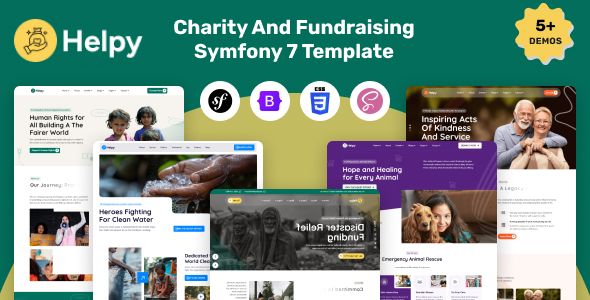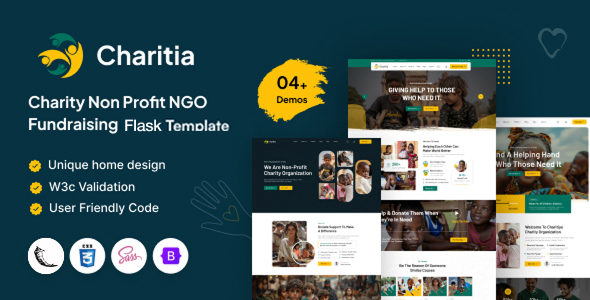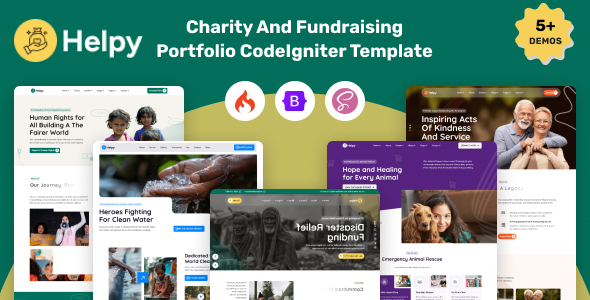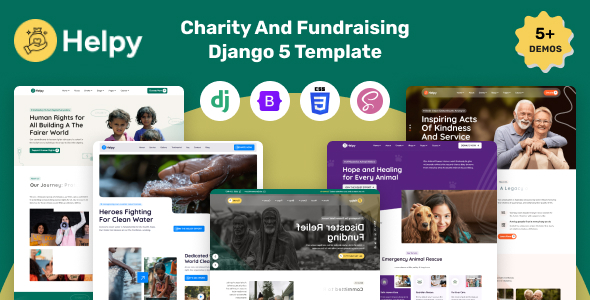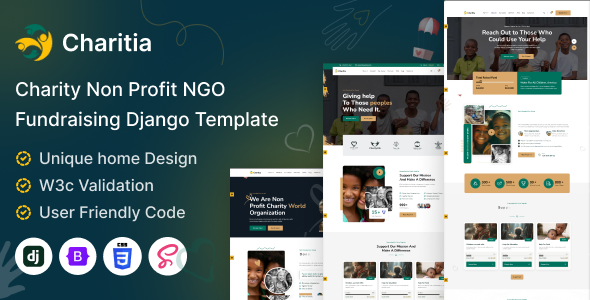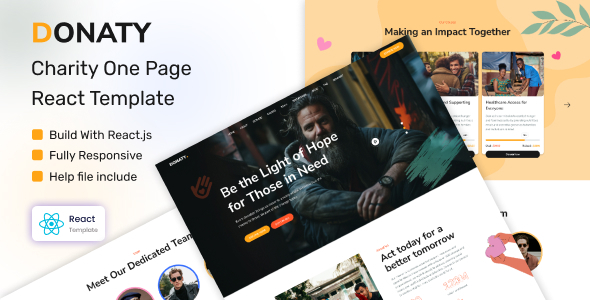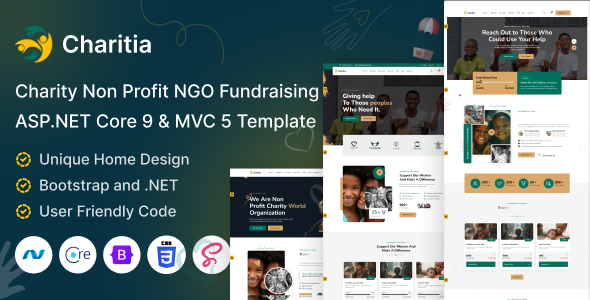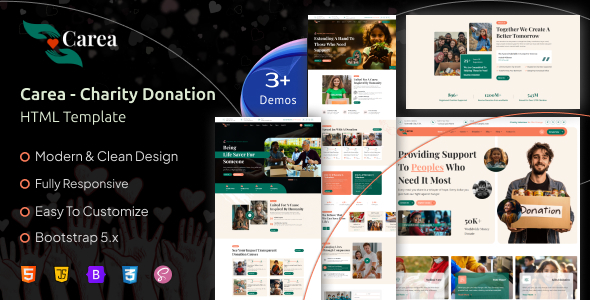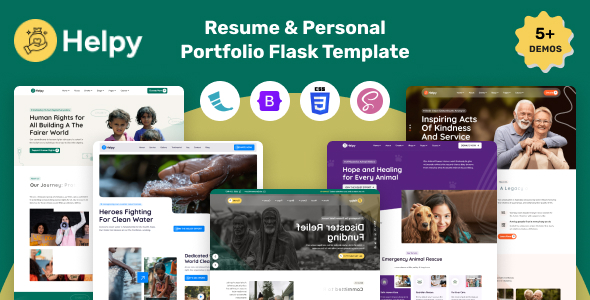
Helpy is a Flask template for charity and fundraising websites, providing 5+ demos and 30+ pages built with Bootstrap and SCSS for rapid development. It's a solid starting point for agencies and freelancers tackling non-profit or crowdfunding projects.
Product overview for charity and fundraising websites
This isn't a full CMS or a drag-and-drop builder; it's a frontend template package built on Flask. What you get here is a collection of HTML, CSS (SCSS), JavaScript, and Flask routes structured to deliver a website specific to the charity and fundraising niche. It’s designed to give you a head start, not a finished product requiring no code.
In our experience building multiple agency sites, a setup like this saves a significant chunk of time on initial setup and styling, especially when the client needs common layouts like donation pages, event listings, or about sections. It solves the headache of starting a Flask project from scratch when the frontend is a known quantity.
Who should use this Flask template for non-profit websites
This template is ideal for web developers, freelancers, or agencies who are comfortable with Flask and Bootstrap. If you're frequently asked to build non-profit websites or need a solid base for a crowdfunding platform, Helpy can drastically cut down your initial development hours. It's a good fit for those who need to deliver a polished frontend quickly and then integrate custom backend logic or third-party APIs.
Who shouldn't use it? If you're looking for a no-code solution, a WordPress theme, or a template that comes with a full-fledged admin panel for managing donations, this isn't it. This is a developer tool. It's also not for someone needing deep, custom backend logic out of the box without writing Flask code yourself.
Design approach and visual consistency
The design relies heavily on Bootstrap, which means it’s inherently responsive and mobile-friendly. While the description mentions "clean and unique design" and "pixel perfect," in reality, it's a well-executed Bootstrap layout. That's not a bad thing; Bootstrap provides a robust, widely understood framework that ensures standard accessibility practices and cross-browser optimization.
The use of Google Fonts like Quicksand and Nunito Sans ensures good typography without licensing issues. The overall aesthetic is professional and appropriate for a charity website, focusing on clear calls to action and readability rather than overly flashy elements.
Layouts and pre-built pages for charity projects
You get 5+ pre-built demos and over 30 page files. This is where the real value lies. Instead of building common pages like "About Us," "Contact," "Events," "Donate Now," or "Our Team" from scratch, you have ready-made layouts. When we tested the kit on a demo site, these pages provided a solid foundation, allowing us to focus on content population and specific client customizations rather than basic structural work.
- You get a variety of layouts for common charity sections, saving hours on initial design.
- The included pages cover most needs for a charity website development with Flask project, from landing pages to specific campaign details.
Developer experience and code structure
The template is built with Flask and Bootstrap, with SCSS support. This is a good sign for developers. SCSS means the CSS is organized and maintainable, making it much easier to change colors, fonts, and spacing consistently across the entire site. For a business owner, this translates to lower maintenance costs and easier branding updates down the line.
The documentation is noted as "well documented," which is crucial for any developer jumping into a new codebase. While the claim "easy to convert in any CMS" is a bit of a stretch for a Flask template, what it means is that the frontend structure is clean enough that you could theoretically extract the HTML/CSS and integrate it into a different CMS if needed, but that's a separate development task.
SEO considerations for charity websites
A template built with Bootstrap generally provides a clean semantic structure, which is a good starting point for SEO. The proper use of headings, paragraphs, and lists helps search engines understand content hierarchy. Given it's a Flask template, you have full control over meta tags, URLs, and server-side rendering, which are critical for technical SEO.
The emphasis on clean code and responsiveness also contributes to better Core Web Vitals, which search engines increasingly prioritize. A fast, mobile-friendly site means better user experience and potentially better rankings for your non-profit organization.
Final verdict on Helpy as a development starter
Helpy is a practical Flask template for anyone regularly building charity or fundraising websites. It’s not going to revolutionize your workflow, but it will certainly streamline the initial setup for a Flask template for non-profit websites. The pre-built pages and SCSS support are genuine time-savers, allowing developers to jump straight into customizing content and integrating specific backend features.
While the design is standard Bootstrap, it's a solid, reliable foundation. You’re buying a head start on the frontend and a well-structured Flask environment, which is a smart investment to avoid repetitive setup tasks. If you understand Flask and need a reliable crowdfunding platform starter kit, this is a good choice to accelerate your projects.
FAQ
Is this Flask template suitable for large-scale non-profit organizations?Yes, the frontend can scale well due to its Bootstrap foundation. However, the backend logic for managing large-scale donations or user accounts would need to be custom-developed within Flask.
Can I easily change the branding and colors to match my organization's identity?Absolutely. With SCSS support, you can quickly modify variables for colors, fonts, and other styles, allowing for consistent branding changes across the entire template with minimal effort.
Does this template include any donation processing or payment gateway integrations?No, this template provides the frontend design and Flask structure for a donation page. You would need to integrate your chosen payment gateway (e.g., Stripe, PayPal) and handle the backend processing yourself.