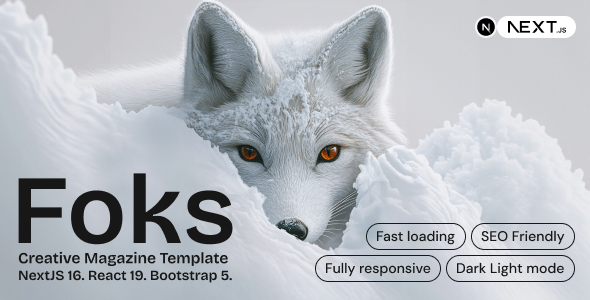
Foks is a Next.js template tailored for content-heavy sites like online magazines or personal blogs, offering a performant foundation for developers building fast, readable platforms.
Evaluating Foks: A Practical Next.js Blog Template for Publishers
The core problem this template addresses is the time sink involved in setting up a robust, performant front-end for publishing content. Many teams spend days configuring basic layouts, ensuring good Core Web Vitals, and integrating modern tooling. Foks provides a ready-to-go architecture, making it a smart investment for agencies or individual developers who need to launch content sites quickly without starting from scratch. It’s particularly useful for those seeking a lightweight Next.js theme for publishers who prioritize speed and a clean reading experience.
Technical Standards and Key Features of this Next.js Magazine Website Template
From a technical standpoint, Foks uses current Next.js and React patterns, including TypeScript, which is a significant plus for maintainability and scalability on larger projects. The inclusion of Bootstrap simplifies responsive design, although some developers might prefer a utility-first CSS framework. The template's clean semantic structure for SEO is a given with Next.js, and it generally aligns with standard accessibility practices, which is crucial for a content-focused site. The SCSS setup is modular, making it straightforward to override styles or extend components without fighting a bloated stylesheet.
- The template's use of TypeScript means fewer runtime errors and better code predictability, leading to lower maintenance costs over time.
- It offers a clean semantic HTML structure, which is fundamental for search engine optimization and better content discoverability.
- The SCSS organization is component-based, making it easier to locate and modify styles for specific sections, speeding up customization.
- Asset loading feels efficient thanks to Next.js optimizations, contributing to fast page loads and a better user experience, which directly impacts bounce rates.
- The inclusion of Figma source files is a huge win for design-to-development workflows, allowing for precise design adjustments and client presentations.
What Impresses About This Lightweight Next.js Theme
What stands out is the focus on a distraction-free reading experience. Many blog templates get bogged down with unnecessary animations or excessive UI elements. Foks keeps it clean, which is essential for user engagement on content sites. The code organization is logical, making it easy to jump in and start customizing, a significant improvement over market-average templates that often have tangled dependencies.
Who is this Next.js Template For?
This template is ideal for developers building online magazines, personal blogs, or content hubs for clients who need a performant, SEO-friendly front-end. It's great for agencies needing fast turnarounds on publishing platforms where content presentation is key. However, it's not for those needing deep custom backend logic or complex e-commerce functionalities out of the box, as it's primarily a front-end template.
Limitations: What Feels Average
While the design is clean, it's also quite standard. There aren't many unique visual flourishes that differentiate it significantly from other minimalist blog designs. The mobile menu, for instance, is functional but a fairly conventional hamburger icon and slide-out panel. It works, but it doesn't offer any innovative interaction patterns. One thing I'd change is to provide a few more diverse content layouts beyond the standard blog post and listing pages, perhaps a dedicated author profile page or a more complex category archive structure.
Final Thoughts: Is it worth it?
Foks is a solid, no-nonsense Next.js template. If you're looking to save significant development time on the front-end for a content-driven website, this template provides a robust, performant, and well-structured starting point. The inclusion of TypeScript and Figma files alone justifies the investment for many teams, making it a logical choice to accelerate project timelines and ensure a high-quality outcome.
FAQ
Can I integrate Foks with a headless CMS?Yes, Foks is a front-end Next.js template, making it well-suited for integration with any headless CMS like Strapi, Contentful, or Sanity. You would fetch content via API calls.
How easy is it to customize the styling and branding?The template uses SCSS, which is organized logically, making it relatively straightforward to change colors, fonts, and other styles. The included Figma files also aid in precise design adjustments.
Does this template support multiple authors or user roles?Foks provides the front-end structure for displaying content. Managing multiple authors or user roles would typically be handled by your chosen headless CMS or backend system, which the template would then display.