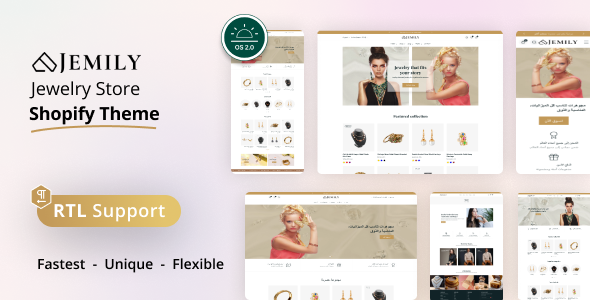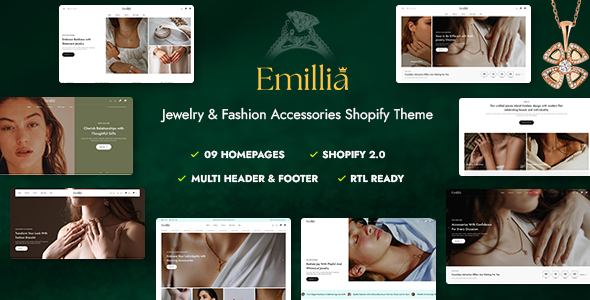
Emillia is a Shopify theme specifically designed for jewelry, fashion accessories, and luxury boutiques, providing multiple pre-built layouts and essential e-commerce features for rapid store deployment.
Who Emillia Shopify Theme is For (and Who It's Not)
This theme is a solid choice for agencies and freelancers tasked with building visually rich fashion ecommerce websites quickly. It's particularly well-suited for businesses selling high-end jewelry, watches, or designer accessories where product presentation is paramount.
If you need to launch a polished online jewelry store or a boutique for fashion accessories without starting from scratch, Emillia provides a strong foundation. It's less ideal for those requiring highly custom backend logic, unique subscription services, or complex bespoke integrations beyond what Shopify's app ecosystem naturally supports.
Workflow Value & Problem Solving for Fashion eCommerce
Emillia tackles the common challenge of quickly establishing a high-converting store for visually driven products. The inclusion of 09 Pre-Built Homepage Demos significantly cuts down initial design and development time, allowing us to focus on content rather than layout. This is a real time-saver for clients on tight budgets or deadlines.
For fashion and luxury items, features like the Product variant image swatch and 360 Product Section are crucial. They allow customers to inspect items closely, which directly impacts conversion rates for an online jewelry store or accessory shop. The built-in Free shipping threshold bar is another practical conversion tool that saves us from installing yet another third-party app.
The theme's multiple Collection page layout styles and content organization options (pagination, load more, infinity scroll) are also valuable. These help manage large product catalogs, which is common when dealing with extensive fashion accessories collections, improving the browsing experience for shoppers.
Under the Hood: Developer Insights & Standards
Working with Emillia, we find the Shopify sections implementation quite robust, which is standard for a modern Shopify theme. This means content editors can manage most page elements directly, reducing ongoing developer requests for minor content changes.
The theme includes image lazy loading, which is critical for maintaining good Core Web Vitals, especially with the high-resolution product photography typical in the luxury fashion niche. A well-implemented lazy load helps ensure faster initial page loads and a smoother user experience on mobile devices.
We appreciate the clear distinction of the Mobile Menu canvas, which offers a streamlined navigation experience on smaller screens. This attention to mobile-first design is essential for an ecommerce website template, as a significant portion of traffic for fashion brands comes from mobile users. The underlying semantic HTML structure for product pages also contributes positively to search engine optimization.
What Could Be Better in this Shopify Theme
While Emillia offers a good number of layout options, some of the nine demos feel like minor stylistic variations rather than truly distinct design languages. If you're aiming for a very specific, unique aesthetic, you might still find yourself doing a fair bit of custom CSS work to differentiate your brand.
The theme bundles many "app-like" functionalities, such as quick view and wishlist, directly into its code. This can be convenient, but it means we're tied to the theme's implementation rather than having the flexibility of a dedicated, potentially more feature-rich third-party app. This is a trade-off between out-of-the-box functionality and deeper customization or long-term maintainability.
Final Thoughts on Emillia for Luxury Ecommerce
Emillia delivers a solid, well-rounded foundation for anyone building a Shopify store in the jewelry, fashion, or luxury accessories space. Its strength lies in its comprehensive set of visually focused features and conversion tools, all within the Shopify ecosystem.
For agencies and small businesses looking to launch a polished, functional fashion accessories ecommerce website quickly, this theme offers significant time savings. It provides the essential building blocks to present high-end products effectively and drive sales without needing extensive custom development from day one.
ThemeSparkle Expert Score
Overall Score: 7.8 / 10
- Niche Specificity: 9/10. The theme excels with features tailored for high-end product display and variant handling, which are crucial for the jewelry and fashion accessories market.
- Visual Standards & Aesthetics: 8/10. The design aligns well with current luxury fashion trends, focusing on clean layouts and strong product imagery, providing a visually appealing storefront.
- Ease of Setup: 7/10. With multiple pre-built demos and Shopify sections, initial setup is straightforward, though some customization requires navigating numerous options.
- Customization Flexibility: 7/10. While offering many layout and section options, deep design changes beyond the provided styles might require custom code due to the integrated feature set.
FAQ
How does Emillia handle complex product variants like different materials or engravings?Emillia supports standard Shopify product variants, offering features like image swatches and pattern displays to visually represent options such as material or color. For highly custom options like engravings, you would typically need to integrate a third-party product customizer app.
Is Emillia optimized for large product catalogs common in fashion accessories?Yes, the theme includes multiple collection page layouts and options for content organization like infinite scroll or pagination, which are beneficial for managing and displaying extensive product inventories efficiently.
Can we easily integrate marketing tools like email signup forms or pop-ups with Emillia?Emillia comes with built-in popup banner and newsletter functionalities, which cover basic marketing needs for email capture. For more advanced marketing automation or CRM integrations, standard Shopify app integrations are usually required.