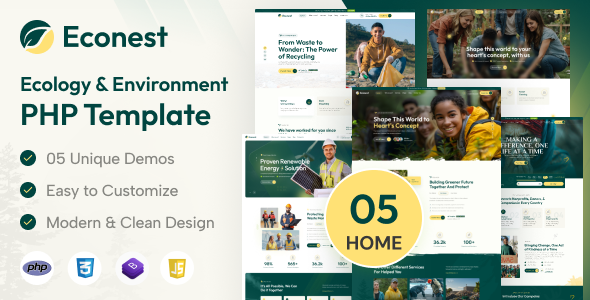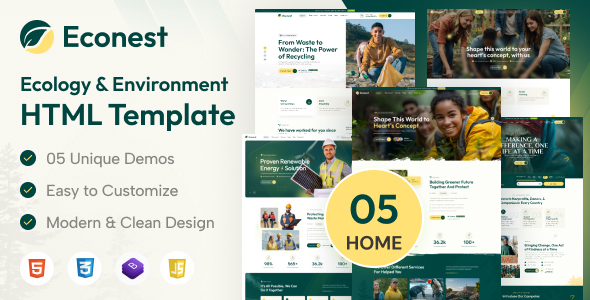
Econest is an HTML5 template for environmental organizations, green energy, and conservation projects, offering 5 homepages and a responsive layout. It's ideal for agencies needing a fast, static site build.
Econest Template Overview for Environmental Projects
This is a straightforward HTML template, not a WordPress theme or a full CMS solution. It's built with Bootstrap, which means it uses a widely recognized framework for its grid and component styling. You get five distinct homepages and a collection of inner pages, all focused on the ecology and environment niche.
The core problem it solves is the initial design and front-end setup for a specific type of client. If you have a client in the green energy or conservation space and they need a solid, clean, static web presence quickly, this template provides a strong starting point without having to build everything from scratch.
Who Benefits from this Eco-Friendly Website Design?
Econest is primarily for web developers and small agencies who build static websites for clients in the environmental sector. If you need to launch an HTML template for environmental organizations quickly, perhaps for a small non-profit or a green business that doesn't require a complex content management system, this is a viable option.
It's also suitable for freelancers looking to offer a cost-effective solution for a simple online presence. However, this template is not for anyone needing a dynamic website with backend logic, database integration, or easy content updates via a CMS. If your client expects to update their own blog daily or manage an e-commerce store, you'll need to integrate this front-end with a separate system or look elsewhere.
Design and Visual Approach for Green Initiatives
The design follows a clean, modern aesthetic, which is pretty standard for templates built on Bootstrap. It avoids overly complex animations or heavy visual elements, keeping the focus on content. In our experience, this approach often translates to better performance and a less cluttered user experience for an eco-friendly website design.
The five homepages offer enough variety to cater to slightly different project types within the environmental niche. The layouts are logical and the typography is clear, which is crucial for conveying important messages about conservation or green initiatives. It doesn't reinvent the wheel, but it delivers a functional and visually acceptable base.
Included Layouts and Core Pages for Green Businesses
Econest provides five unique homepages, which is a decent selection for a static HTML template. Beyond the homepages, it includes various inner pages, which typically cover services, about us, contact, and potentially some project or campaign pages. This range of pre-built pages means you spend less time on basic page construction.
- 5 Unique Homepages: Offers distinct starting points for different project focuses.
- 5 Header Styles: Provides some flexibility in the site's top navigation area.
- Blog / News Pages: Essential for sharing updates and engaging with an audience.
The inclusion of blog pages is a good touch, allowing for content updates even if they're manually managed. When we tested the kit on a demo site, the content structure felt predictable and easy to navigate for a static site for green business.
Content Sections for Ecology and Conservation
While the template includes blog pages, it doesn't specify dedicated sections for portfolios or project showcases beyond what might be integrated into the homepages. For environmental organizations, clearly displaying past projects, campaigns, or scientific findings is often key. You'd likely need to adapt existing pages or create new ones to serve this purpose effectively.
The focus here seems to be on a general informational presence rather than a deeply specialized content hub. This is a natural limitation for a static HTML product; complex content relationships are usually handled by a CMS.
Code Quality and Developer Experience with Econest
The template is built on Bootstrap, which is a plus for many developers. It means the underlying structure is familiar and well-documented. The description mentions "clean & commented code" and "W3 Valid HTML Files," which are good indicators of a template that won't give you immediate headaches. Clean code means lower maintenance costs for a business owner, as future updates or changes are less likely to break things.
After building multiple agency sites with tools like this, we appreciate W3C valid HTML as it generally contributes to better search engine understanding and accessibility. The file organization is standard for a Bootstrap project, making it easy to locate and modify CSS or JavaScript files. For basic styling changes, you're directly editing CSS files, which is straightforward for anyone with front-end experience.
Responsiveness and Browser Compatibility for Eco Sites
Econest is advertised as fully responsive and tested on real devices, which is expected from any modern web template. Being built with Bootstrap, it inherently handles various screen sizes well, from desktops down to small mobile devices. This ensures a consistent and positive experience for all users, regardless of how they access the site.
Cross-browser compatibility is also listed, meaning it should render correctly across major browsers like Chrome, Firefox, Safari, and Edge. This is standard practice but still important to confirm, as a good mobile experience and broad browser support are critical for reaching a wider audience and maintaining engagement.
SEO Readiness for Environmental Organizations
The template's foundation in W3C valid HTML and clean code provides a good starting point for search engine optimization. A semantic HTML structure helps search engines understand the content hierarchy, which is beneficial for ranking. While a static HTML template doesn't offer built-in SEO tools like a CMS, its clean code base and fast loading times (due to being static) can positively impact Core Web Vitals.
You'll need to manually implement meta tags, schema markup, and ensure proper content optimization, but the technical groundwork is solid. Good technical SEO practices, coupled with quality content about environmental issues, can help these sites rank for relevant search terms.
Final Verdict: Is Econest a Smart Investment?
If you're an agency or freelancer needing a quick, reliable front-end for environmental or green energy clients, Econest is a sensible choice. It provides a solid, well-structured HTML template that saves you significant time on initial design and responsive setup. The Bootstrap foundation makes it familiar to work with, and the clean code ensures maintainability.
While it lacks dynamic features, that's a trade-off for its simplicity and speed. For a client who needs a professional online brochure or an informational hub without complex backend requirements, this template gets the job done efficiently. It's a smart investment if your workflow involves delivering static sites quickly and you appreciate a clean, pre-built foundation.
FAQ
Can I easily customize the colors and fonts?Yes, since it's an HTML and CSS template, you can change colors and fonts by directly editing the CSS files. It uses Google Fonts, making font adjustments straightforward.
Is this template suitable for a website that needs regular content updates?This template is HTML only, so it lacks a content management system. Regular content updates would require manual editing of HTML files, which is not ideal for non-technical users.
How does Econest perform in terms of website speed?As a static HTML template, Econest generally offers excellent loading speeds. There's no server-side processing, which contributes to faster page delivery and better Core Web Vitals scores.
Can I add e-commerce functionality to this template?You could integrate a third-party e-commerce solution like Shopify Buy Button or Snipcart, but the template itself does not come with built-in e-commerce features or pages for product listings and checkout.