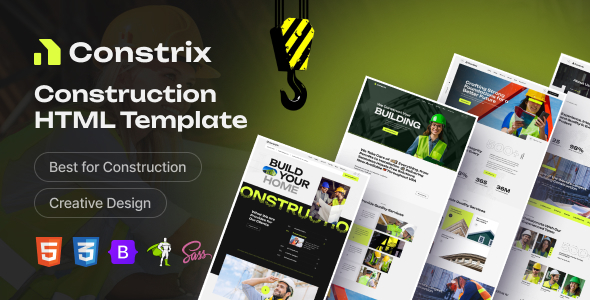
Constrix is an HTML template designed for construction companies, architecture firms, and related industrial businesses. It provides a set of pre-built pages and components to quickly establish an online presence for these niches.
Accelerating construction company website launches
The core problem Constrix solves is the initial setup time for a construction company website. Agencies or freelancers often need to spin up a professional-looking site quickly for clients in this sector. This template offers a structured starting point, saving significant hours on layout, common section styling, and ensuring a responsive base. It means less time spent on boilerplate front-end development and more on content and specific client needs, directly translating to faster project delivery and potentially higher margins.
Diving into Constrix's code and features for engineering firms
From a technical standpoint, Constrix is built on Bootstrap, which provides a familiar and robust grid system. This makes layout adjustments predictable and responsive behavior generally reliable across devices. The use of clean HTML5 and CSS3 standards is evident, which helps with long-term maintainability and reduces the learning curve for new developers stepping onto a project. The asset loading feels standard; nothing particularly optimized for Core Web Vitals out of the box, but also nothing overtly detrimental. It uses Google Fonts, which is common, and Font Awesome for icons, both of which are industry standards for ease of use and broad support.
- The CSS is organized in a fairly flat structure, which is typical for many templates. While not using a SASS architecture, it remains manageable for projects that don't require deep custom styling or a large number of components. This means lower maintenance costs for basic updates.
- Mobile menu behavior is straightforward, using standard Bootstrap collapsing, ensuring a consistent and user-friendly experience on smaller screens.
- Image placeholders are included, which is helpful for setting up content quickly without worrying about sourcing initial assets. This speeds up the content population process.
- The inclusion of specific pages like project portfolios, service listings, and team pages directly addresses the common content requirements for an engineering firm HTML layout, making it a practical choice for showcasing work and expertise.
- GSAP animations are present but used judiciously, adding some visual flair without heavily impacting performance or becoming a distraction. This contributes to a more engaging user experience without being overbearing.
What stands out in this industrial business web template
What impresses most is the sheer number of pre-designed pages tailored for the construction and industrial niche. Having three distinct homepages and a good array of inner pages, including ecommerce layouts, means there's a strong foundation for various client requirements. This directly reduces the effort needed to create common sections like "About Us," "Services," "Projects," and "Contact," which are critical for an industrial business web presence. The overall design is clean and professional, avoiding the overly flashy aesthetics that often plague these types of templates, making it suitable for a serious business.
Who should use this construction HTML template and who shouldn't
This template is well-suited for web development agencies and freelancers building sites for construction, architecture, engineering, or industrial clients who need a quick, reliable, and professional-looking front-end. It's also a good fit for small to medium-sized businesses in these sectors looking to establish an online presence without extensive custom development. However, it's not for those requiring highly unique, bespoke designs from scratch, or projects that demand deep, complex custom backend logic tightly integrated with the front-end components.
Where Constrix meets standard expectations
While functional, the overall design aesthetic of Constrix, despite being clean, doesn't break new ground. It feels like a solid, market-average template in terms of visual innovation. The layouts are logical and effective, but they don't offer a particularly unique or memorable visual identity that would make a site stand out in a crowded market without significant custom styling. It's a dependable workhorse, but not a design trailblazer.
Final Thoughts: Is it worth it?
For anyone in the business of building websites for the construction and industrial sectors, Constrix is a practical investment. It provides a solid, well-structured starting point that genuinely saves development time on the front-end. If your goal is to deliver a functional, professional, and responsive website efficiently, this template offers a clear path to achieve that, allowing you to focus resources on content and client-specific features rather than foundational setup.
FAQ
Is this template easy to customize for specific branding?
Yes, the CSS structure is straightforward enough for developers to adjust colors, fonts, and basic styling to match a client's brand guidelines without major refactoring.
How does it handle project portfolio updates for a client?
Since it's an HTML template, clients would need to manually edit HTML files or integrate it with a CMS. For simple updates, a developer would typically make the changes.
What is the typical performance like on mobile devices?
Given its Bootstrap foundation and relatively clean code, the template generally performs well on mobile, offering good responsiveness and load times for a standard HTML site.