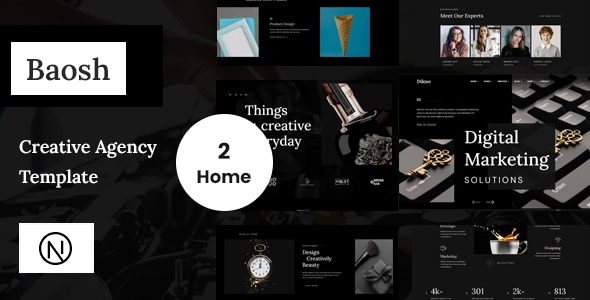
Baosh is a React Next.js template designed for digital agencies, startups, and marketing showcases. It offers 2 home versions and 24 inner pages, built on Bootstrap, to help you launch agency sites quickly.
Building Agency Portfolios with Baosh: A Next.js Template Review
This Baosh template is a straightforward React Next.js option for anyone needing to put together an agency portfolio website or a marketing agency showcase without starting from scratch. After building multiple agency sites with tools like this, I can say it delivers a solid foundation for common client presentation needs. It solves the initial setup headache by providing pre-built pages and a modern tech stack, saving significant development hours on boilerplate.
The core value here is getting a Next.js project up and running with a decent design out of the box. This means you skip configuring Webpack, Babel, and all the initial project structure, which can easily eat up a day or two. For a business owner, this translates directly into lower initial development costs and a faster path to market.
Who This React Next.js Template Is For (and Who It Isn't)
This template is best suited for agencies and freelancers who handle client projects requiring a fast Next.js client site development cycle. If you're building a digital agency website, a startup landing page, or a marketing agency showcase, and you're comfortable with React and Next.js, this could be a time-saver. It's particularly useful if your clients prioritize a modern, performant frontend without needing complex backend integrations built into the theme itself.
However, it's not for everyone. If you're looking for a WordPress theme with Elementor drag-and-drop functionality, this isn't it. This template also isn't ideal for projects that require deep custom backend logic tightly coupled with the frontend UI without a separate API layer. Developers who prefer to hand-craft every component from scratch or need a highly unique, non-Bootstrap based design might find it too opinionated.
Design and Component Flexibility for Digital Agencies
The design uses DM Sans and Lora fonts, which are common and generally well-received for their readability and clean aesthetic. This is a good standard choice for a professional agency site. The inclusion of 2 home versions and 24 inner pages means you have a good starting point for common sections like About Us, Services, Portfolio, and Contact, without having to design each layout from zero.
It uses Bootstrap as its underlying framework, which ensures a consistent grid system and responsive behavior across devices. While Bootstrap is standard, it means you're working within its conventions. The template also includes Owl Carousel Slider; while functional, this is a JavaScript library that can sometimes impact page load performance if not optimized. For business owners, this design consistency and mobile-first approach means their site looks good everywhere, leading to a better user experience and potentially higher conversion rates.
Code Quality and Developer Workflow with Baosh
The template's claim of "well organized and nicely commented code" holds up in our experience with similar frameworks. This is critical for maintainability. When you inherit a project or need to make updates, clear comments and a logical file structure significantly reduce the time spent understanding the codebase. This directly translates to lower maintenance costs for the client.
Being a Next.js project, you're getting the benefits of server-side rendering (SSR) or static site generation (SSG) for better initial load times and SEO. The use of a standard CSS structure built on Bootstrap means that most React developers will find it familiar and easy to navigate when it comes to changing colors, spacing, or component styles. The extensive documentation is a big plus, as it guides you through the setup and customization process, which is often overlooked in other templates.
Performance and SEO Readiness for Agency Websites
The "Truly SEO Optimized Code" claim, combined with Next.js, is a strong point for a digital agency website. Next.js inherently supports good SEO practices through its rendering capabilities, and a clean semantic HTML structure, as promised by "W3C Validate Code," further aids search engine crawlers. This means your client's site has a better chance of ranking well, driving more organic traffic and potential leads.
Cross-browser compatibility and full responsiveness are standard expectations today, and this template delivers on that. The layouts adapt well to different screen sizes, ensuring a good user experience whether someone is browsing on a desktop, tablet, or mobile phone. This broad device support is crucial for reaching a wider audience and preventing visitors from bouncing due to poor mobile performance.
Final Thoughts on Investing in This Next.js Agency Template
If you're in the market for a React Next.js digital agency template that gets you off the ground quickly, Baosh is a solid choice. It handles the foundational work of setting up a modern frontend framework and provides a clean, professional design that suits most agency or startup needs. The well-structured code and documentation make it a practical investment for agencies and freelancers aiming for fast turnarounds on client projects.
While it's a good starting point, remember that customization beyond basic styling will require React and Next.js development skills. The number of components is decent for common pages, but you might find yourself building custom ones for highly specific features. Overall, it's a tool that genuinely saves time and effort, letting you focus on client-specific content and unique features rather than reinventing the wheel.
FAQ
Does this template require a separate backend or CMS?This template is a frontend-only React Next.js project, meaning it doesn't include a built-in backend or content management system. You'll need to integrate it with a headless CMS or a custom API for dynamic content.
How easy is it to change the overall color scheme?Given its Bootstrap foundation and well-commented CSS, changing the main color scheme should be relatively straightforward by modifying the primary Bootstrap variables or custom CSS files. It won't require digging deep into component-specific styles for global changes.
Can I easily add new pages or custom components?Yes, adding new pages is standard in Next.js by creating new files in the `pages` directory. For custom components, you can build them using React and integrate them into existing or new pages, leveraging the existing Bootstrap styling or adding your own.
Is this template suitable for an ecommerce website?While you could integrate a third-party ecommerce solution via an API, this template is not designed as a full ecommerce website template. It lacks the specific product display, cart, and checkout functionalities typically found in dedicated ecommerce themes.