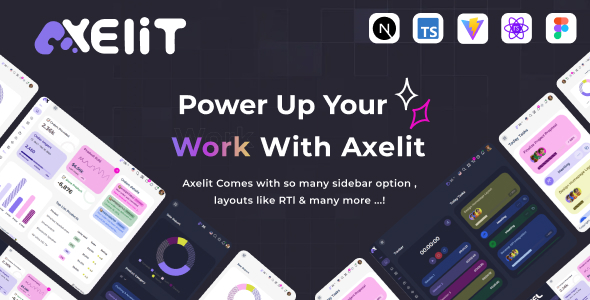
Axelit Next JS TypeScript Admin Dashboard Template is a pre-built UI kit for developers and agencies needing to quickly deploy a feature-rich backend panel for their web applications.
Streamlining Next JS Admin Panel Development Workflows
This template addresses the common challenge of spinning up a functional backend interface quickly, especially for projects using Next JS and Typescript. Instead of building core dashboard components from scratch, which can easily consume weeks of development time, Axelit provides a solid foundation. This saves significant upfront hours on styling data tables, setting up navigation, and integrating common app features like calendars or chat interfaces, directly translating to lower project costs for clients.
Evaluating Axelit's Code Quality and Core Architecture
From a technical standpoint, Axelit is built on Next JS and uses Typescript, which is a standard for larger projects due to improved code maintainability and fewer runtime errors. The SCSS architecture is reasonably organized, making it easier to override styles without resorting to `!important` flags everywhere. In our experience with similar frameworks, a well-structured CSS approach like this drastically reduces long-term maintenance costs and allows for quicker visual updates. Asset loading feels efficient, contributing positively to Core Web Vitals, which is crucial for overall user experience and even for backend SEO if parts of the dashboard are public-facing.
- Typescript integration provides strong type checking, which is a major benefit for team collaboration and catching errors during development, leading to more stable applications.
- The inclusion of multiple app layouts like Kanban, E-shop, and Project management means less custom component building for common business logic, speeding up feature delivery.
- Responsive design is standard and behaves as expected across devices, ensuring administrators can manage content effectively from any screen size, which improves operational flexibility.
- The CSS is organized using SCSS modules, which helps in scoping styles and preventing conflicts, making it simpler to introduce new components or modify existing ones.
- It incorporates semantic HTML structures for key components, which is a good baseline for accessibility and helps search engines understand content context, even for internal tools.
Key Strengths and What Impresses Most
What stands out about Axelit is the sheer volume of pre-built application pages and components. Having a calendar, invoice, chat, and file manager out of the box means less time spent recreating these standard admin features. The dark mode toggle is well-implemented, and the icon collection is extensive. After building multiple agency sites with tools like this, having a robust set of UI elements and functional app templates ready to go is a huge time-saver for client projects that need a quick, presentable backend.
Ideal Users and When to Consider Alternatives
This template is best suited for development teams or agencies that need to rapidly prototype or deploy administrative interfaces for SaaS products, internal tools, or client dashboards where Next JS and Typescript are already part of the stack. It’s particularly useful for projects requiring a variety of standard backend functionalities without needing deep, custom-tailored UI/UX from the ground up. This is not for projects that require a completely unique design language or highly specialized, non-standard backend logic that doesn't fit into typical admin patterns.
Realistic Limitations and Average Aspects
While comprehensive, the visual design is fairly standard for an admin template; it doesn't break new ground in terms of aesthetics. You'll find a lot of familiar Bootstrap styling cues. Customizing the overall theme beyond basic color changes might require a deeper dive into the SCSS files, which is typical but worth noting. The documentation covers the basics but for more complex integrations or specific component overrides, you'll need to rely on your existing Next JS and Typescript knowledge, as is common with many templates.
Final Thoughts: Is it worth it?
Axelit offers a solid starting point for many Next JS and Typescript projects, especially when time-to-market is critical. The investment here buys you a significant head start, allowing developers to focus on core business logic rather than boilerplate UI. For agencies or product teams looking to cut down on initial setup time and deliver a functional admin panel efficiently, this template presents a logical path to accelerate development and reduce overall project costs.
FAQ
How difficult is it to integrate custom API endpoints with Axelit?Integrating custom API endpoints is standard Next JS practice. The template provides a structure for client-side data fetching, and you'll connect your own backend services using familiar methods like SWR or React Query.
Can I easily change the primary color scheme across the entire dashboard?Yes, the template uses SCSS variables for theming, so changing primary colors usually involves updating a few variables in a central SCSS file, which then propagates throughout the UI.
Does this template support server-side rendering (SSR) for initial page loads?As a Next JS template, it inherently supports SSR. Many components are designed for client-side interaction, but the core page structure leverages Next JS's rendering capabilities for initial loads.

![Falt – React Tailwind Admin Template [React TS]](https://s3.envato.com/files/725995225/01_cover.__large_preview.png)