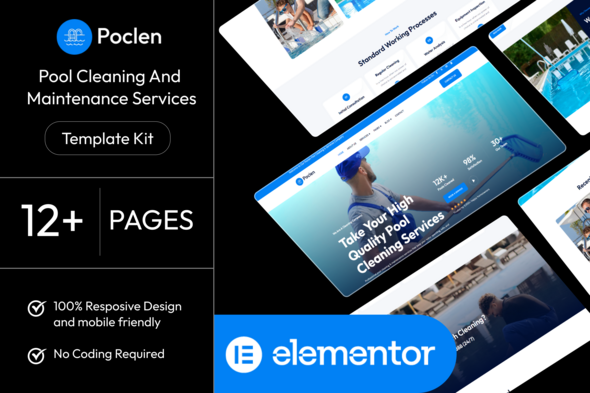
The Dewatt Elementor template kit provides a set of pre-built pages and blocks for electrical service businesses, offering a rapid deployment solution for agencies or freelancers building client sites using WordPress and Elementor.
Solving the Electrical Service Website Setup Headache
This kit directly addresses the common problem of quickly launching a niche-specific site without starting from a blank canvas. For an electrician business website, you often need dedicated pages for services, a project portfolio, team profiles, and a clear contact path. Dewatt provides these layouts out of the box, saving significant design and development hours on initial setup and styling.
In our experience building multiple agency sites with tools like this, having these foundational pages ready means you can focus on content and client-specific adjustments, not on structuring every section. This translates into faster project turnarounds and a better return on investment for the agency.
Technical Standards and Practical Features for Elementor Kits
The Dewatt kit leverages Elementor's ecosystem, which means a certain level of expected functionality and a commitment to the page builder's architecture. It's designed to work with the free Elementor plugin, which is a definite plus for keeping client costs down. The inclusion of global styling options for fonts and colors is standard practice and genuinely useful; it means a business owner can manage their brand identity from one central place, simplifying future updates and reducing maintenance costs.
Regarding compliance, Elementor generally produces reasonably semantic HTML, and this kit appears to follow those conventions, which is good for basic SEO and accessibility. However, like any Elementor-based solution, it's crucial to ensure proper heading structure and image alt text are maintained during content population for optimal search engine visibility and user experience.
- Elementor reliance: While it allows for no-code customization, committing to Elementor means accepting its inherent performance characteristics.
- Global styling: The ability to update fonts and colors from a single location significantly streamlines branding changes, which is a practical benefit for long-term site management.
- RTMKit and RTMForm: These custom plugins extend Elementor's capabilities for header, footer, and form management. This can be convenient but also adds specific dependencies beyond core Elementor.
- Semantic structure: The kit maintains a clean, logical heading structure within its templates, which is a solid foundation for search engine optimization and screen reader accessibility.
- Asset loading: Given it's an Elementor kit, expect a standard level of asset loading. It feels reasonably optimized for a page builder, aiming for a decent Core Web Vitals score without heavy custom scripting.
Strengths and What Impresses Most
The primary strength of the Dewatt Elementor template kit is its focus on efficiency for a specific niche. The pre-built pages cover nearly all the common requirements for an electrical contractor website or similar trade service. The design itself is clean and functional, avoiding the excessive animations or overly complex layouts that often bog down other templates. This straightforward approach means less time spent stripping out unnecessary features, allowing for a more direct path to a functional site.
Who is this Dewatt Elementor Kit for?
This kit is ideal for web agencies, freelancers, or even small business owners who need to quickly deploy a professional website for an electrical service, HVAC contractor, or similar trade-based business. It's for those prioritizing speed of delivery and ease of content management over a completely bespoke, custom-coded solution. However, it is not for projects requiring deep custom backend logic, complex integrations beyond standard Elementor capabilities, or clients demanding extreme performance optimization typical of highly custom-coded sites.
Where the Dewatt Kit Feels Standard or Falls Short
While the design is clean, it doesn't break new ground visually. The aesthetic is professional and functional, but it feels like a standard clean Elementor template rather than something truly distinctive. Additionally, the reliance on the RTMKit and RTMForm plugins, while providing useful functionality, means adding external dependencies that might not have the same long-term support or community backing as core Elementor features.
Final Thoughts: Is it worth it?
For anyone regularly building websites for trade services, the Dewatt Elementor template kit is a pragmatic investment. It significantly cuts down on initial setup time by providing a solid foundation of niche-specific pages. If your goal is to deliver functional, good-looking sites quickly and efficiently for clients in the electrical or related service industries, this kit will help you achieve that, saving you valuable time and resources.
FAQ
Does this Elementor kit impact website performance significantly?Elementor itself adds some overhead. This kit, like most, will perform adequately for typical business sites, but it's not designed for extreme performance optimization seen in custom-coded solutions.
Can I easily change the branding and colors across the entire Dewatt template kit?Yes, the kit uses Elementor's global styling, allowing you to update fonts and colors from a central location, which applies changes site-wide.
Is this template kit suitable for other service-based businesses, like plumbing or HVAC?The layouts are generic enough for general service businesses. With content and image changes, it can certainly be adapted for a plumbing service layout or an HVAC contractor website.
Do I need Elementor Pro to use the Dewatt kit?No, the kit is designed to work with the free version of Elementor, which helps keep project costs down for clients.