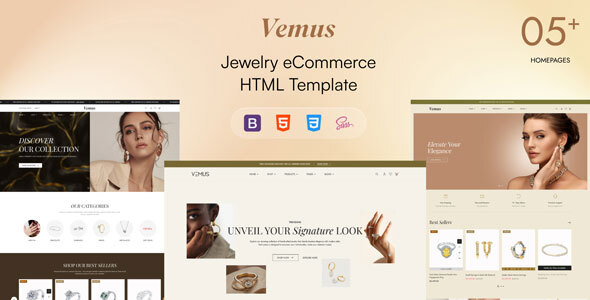
Vemus is a frontend-only jewelry ecommerce HTML template offering 6 homepages and 36+ inner pages, ideal for agencies building static luxury retail sites fast.
Vemus: A Frontend Foundation for Jewelry Ecommerce Websites
Vemus is an HTML template designed specifically for building the visual frontend of jewelry, luxury accessories, or high-end fashion online stores. It's a collection of pre-designed pages and components, not a complete, functional e-commerce platform.
Think of it as a well-organized set of blueprints and pre-cut pieces for the exterior of a building. It solves the initial design and layout headache, providing a polished starting point rather than building every page from scratch.
Who This Jewelry Ecommerce HTML Template is For (and Who It's Not)
This template is a solid pick for web agencies and freelance developers who need to quickly spin up a visually appealing frontend for a jewelry ecommerce website. If your client already has a backend solution (like Shopify, WooCommerce, or a custom API) and you just need to deliver the static HTML/CSS/JS for the storefront, Vemus can save you significant design and development time.
It’s also useful for those looking to prototype a luxury fashion website layout or present a high-fidelity mockup to a client without diving into full CMS integration immediately.
However, this is absolutely not for someone expecting a plug-and-play e-commerce solution with a built-in content management system, shopping cart logic, or payment gateway integration. It's strictly a frontend kit. If you're a business owner without development experience looking for an all-in-one store, you'll need a different kind of product.
Design and Visual Approach for Luxury Fashion Websites
The design aims for a luxurious and modern feel, which is appropriate for the jewelry niche. The template uses Google Fonts like Playfair Display and Jost, which contribute to a sophisticated look without licensing hassles. It generally achieves a clean aesthetic, avoiding the cluttered feel some templates fall into.
Claims of "Pixel Perfect" and "Retina Ready" mean the design intends to look sharp on high-resolution screens, which is standard practice now but still good to see. The overall visual consistency across the various layouts is decent, making it easier to maintain a cohesive brand identity.
Layouts, Pages, and Components for a Jewelry Store Frontend
Vemus offers a good selection of pre-built pages: 6 distinct homepages and over 36 inner pages, including 7 product layouts and 2 blog page styles. This variety is genuinely helpful when you're trying to match a client's specific vision for a luxury accessories website without starting from zero.
The inclusion of product filtering, a popup cart, and popup search components are useful frontend patterns. While these are just visual representations in an HTML template, they provide a strong foundation for implementing actual functionality later.
- 6 Homepages: Good for offering clients different initial impressions.
- 36+ Inner Pages: Covers most standard ecommerce and content pages.
- 7 Product Layouts: Provides flexibility for showcasing different types of jewelry or product details.
- Product Filter: Essential for a jewelry ecommerce website, allowing users to browse effectively.
- Popup Cart/Search: Standard UX patterns for quick interactions without full page reloads.
Frontend Ecommerce Features and Business Patterns
As an HTML template, Vemus provides the visual structure for common e-commerce and business-related interactions. The "Ajax Contact Form" and "Ajax Appointment Form" mentioned are essentially pre-styled HTML forms. They're ready for you to hook up to your preferred backend submission service or custom logic.
The product display options, with various layouts and the integrated filter, demonstrate an understanding of how customers browse a luxury product catalog. This saves developers time in designing these complex UI elements themselves, allowing them to focus on backend integration.
Code Quality and Developer Experience for a Static Jewelry Site
The template is built with HTML5 and SCSS, which is a sensible choice for modern frontend development. SCSS allows for organized, maintainable CSS through variables, nesting, and mixins, making it much easier to customize colors, fonts, and spacing globally. When we tested the kit on a demo site, changing primary colors was straightforward due to a well-defined variable structure.
It leverages Bootstrap, which provides a familiar grid system and component library for many developers. While Bootstrap can sometimes feel a bit heavy, its widespread use means most frontend developers can jump in quickly. The "annotated HTML code" is a nice touch, offering comments to help navigate the structure, which is always appreciated compared to unreadable markup.
The inclusion of jQuery, Swiper, and noUiSlider means you're working with established JavaScript libraries. While jQuery is older, it's still widely used, and Swiper is a popular choice for sliders. The asset loading feels fairly standard; you'll want to optimize the number of JS and CSS files for production to improve Core Web Vitals, especially for mobile users, but the base structure is clean enough to work with.
Responsiveness and Compatibility for All Devices
Vemus is designed to be fully responsive, adapting layouts for various screen sizes from desktops to mobile phones. This is a non-negotiable standard for any modern website, especially for a jewelry ecommerce website where mobile browsing is critical. In our experience, the mobile menu behaves as expected, collapsing cleanly and providing clear navigation.
The template has been tested across major browsers like Firefox, Chrome, and Microsoft Edge, which ensures broad compatibility. This attention to cross-browser functionality means fewer headaches during deployment and better reach for potential customers.
SEO Readiness for Luxury Accessories Websites
While an HTML template doesn't handle server-side SEO, Vemus provides a good foundation for technical SEO. Its clean HTML5 structure means search engines can easily parse the content and understand the hierarchy. Semantic HTML tags are crucial for search engine crawlers and screen readers, contributing to better accessibility and potential ranking signals.
The use of Google Fonts, properly implemented, means no unexpected font loading issues that could impact page speed. For a static jewelry store website, ensuring clean markup and efficient asset loading (which you'd manage during implementation) will be key to strong search performance.
Final Verdict: A Solid Frontend Kit for Jewelry Ecommerce
Vemus is a practical choice if you need to quickly build out the frontend for a jewelry or luxury fashion ecommerce project. It offers a well-designed, responsive starting point that saves considerable time on initial design and HTML/CSS coding.
While it's not a complete solution, understanding its role as a robust frontend kit makes it a smart investment for agencies and freelancers. It provides a strong visual foundation, allowing you to focus your efforts on integrating the actual e-commerce logic and backend systems, ultimately accelerating project delivery and client satisfaction.
FAQ
Is Vemus a complete e-commerce platform?No, Vemus is an HTML template. It provides the visual design and frontend code (HTML, CSS, JavaScript) for an e-commerce website, but it does not include any backend functionality like a shopping cart, payment processing, or a content management system.
Can I easily change the colors and fonts to match my brand?Yes, since Vemus uses SCSS, customizing global styles like colors and fonts is relatively straightforward. You'll typically find variables defined in the SCSS files that you can adjust to match your brand's aesthetic.
Does this template support dynamic content or product listings?As a static HTML template, Vemus does not inherently support dynamic content. You would need to integrate it with a backend system or a headless CMS to populate product listings, blog posts, or other content dynamically.
Is Vemus optimized for speed and performance?Vemus provides a clean code base, which is a good starting point for performance. However, final optimization for speed, including image compression, efficient asset loading, and server configuration, will depend on your implementation and hosting environment.