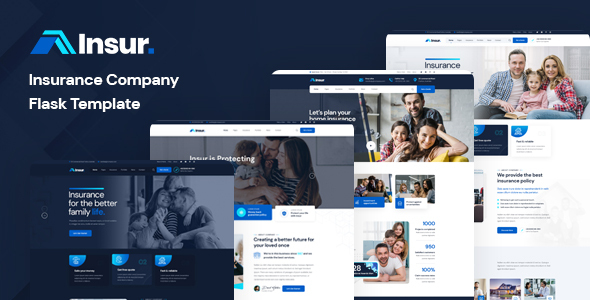
Insur is a Flask template for insurance companies and financial services, offering 10 home layouts and 26+ inner pages built on Bootstrap for developers needing a quick front-end start.
Insur Flask Template: A Front-End Jumpstart for Insurance Websites
This isn't a full application; it's a front-end Flask template package. It provides the HTML, CSS, and JavaScript structure you'd need for an insurance company website, pre-integrated into a Flask project setup. Think of it as a well-organized folder of static assets and Jinja2 templates, ready for you to plug into your Flask backend logic.
The primary problem it solves is the initial design and front-end build for niche insurance websites. Instead of starting from scratch with a blank Bootstrap theme, you get a pre-designed layout tailored specifically for insurance, car insurance, health insurance, or life insurance agencies.
Who Should Use This Insurance Company Template (And Who Shouldn't)
This template is genuinely useful for individual developers or small agencies building client sites who are already comfortable with Flask and Bootstrap. If your workflow involves rapidly prototyping or deploying front-ends that you then connect to a custom Flask backend, this is a time-saver. It’s particularly strong for those needing a solid visual foundation for a financial services website without spending weeks on initial design.
However, if you're looking for a complete content management system, a drag-and-drop builder, or a template with pre-built backend logic for quotes or policy management, this isn't it. This is a developer tool, not an out-of-the-box solution for non-technical users. It’s also not for someone unfamiliar with Flask or basic web development concepts.
Layouts and Pages for Insurance and Financial Services
The template includes 10 distinct home page versions and over 26 inner pages. This variety is a practical advantage for an insurance company template, as different types of insurance (auto, home, life) often require slightly different landing page approaches. You get a good range of options for service pages, about us, contact, and presumably some blog or news layouts based on the page count.
Having these pre-built layouts means you can quickly spin up different demo options for clients or adapt a specific home page for a particular marketing campaign. The inclusion of Owl Carousel Slider is standard for presenting testimonials or featured services, which is common in this industry.
Code Quality and Developer Experience with Insur
In our experience with similar frameworks, a clean codebase saves significant time down the line. This template claims "Valid HTML5 / CSS3," "W3C Validate Code," and "Truly SEO Optimized Code," which are good indicators of a solid foundation. These details translate to lower maintenance costs and better long-term performance for a business owner.
The "Advance Bootstrap Framework" ensures a consistent and well-tested grid system, making layout adjustments predictable. The claim of "All files are well commented" is a developer's dream; it means less head-scratching when you need to dig into the CSS or JavaScript to make specific changes, which directly impacts project timelines and budget.
Responsiveness and Browser Compatibility for Modern Insurance Sites
A "Fully Responsive" design is non-negotiable today, especially for financial services where users might access information on any device. This means the site will adapt well to mobile phones, tablets, and desktops, providing a consistent user experience. This directly benefits business owners by ensuring their site is accessible to a wider audience and performs well on search engines that prioritize mobile-first indexing.
Cross Browser Compatibility is also a standard expectation. While not revolutionary, it ensures the site displays correctly across different browsers like Chrome, Firefox, Safari, and Edge, preventing potential user frustration or lost leads due to display issues.
SEO Readiness for Insurance Niche Websites
The mention of "Truly SEO Optimized Code" suggests the HTML structure follows best practices, using semantic tags correctly. This helps search engines understand the content and structure of your insurance company website, which is crucial for organic visibility. A clean semantic structure also contributes to better accessibility, making the site usable for everyone.
While this template provides the front-end foundation, achieving top search rankings still depends on your content strategy, server performance, and how you implement your Flask backend for things like meta tags and structured data. However, starting with a clean, W3C-validated base is a significant advantage over many bloated templates out there.
Final Thoughts on Accelerating Insurance Website Development
This Insur Flask template is a solid starting point if you're building a front-end for an insurance or financial services client and prefer working within the Flask ecosystem. It gives you a head start with a good variety of pre-designed pages and a clean, Bootstrap-based structure.
The main trade-off is that it’s purely a front-end template; you’ll need to integrate your own Flask backend logic for any dynamic functionality. However, for agencies and freelancers looking to accelerate insurance website development by cutting down on initial design and styling, this offers genuine value. It saves you the grunt work of setting up basic layouts, letting you focus on the custom features that truly differentiate your project.
FAQ
Is this a complete website application with backend functionality?No, Insur is a front-end Flask template, meaning it provides the HTML, CSS, and JavaScript, but you will need to build your own Flask backend logic.
Can I easily change the colors and fonts to match my brand?Yes, since it's built on Bootstrap, customizing colors, fonts, and other styling elements is straightforward for anyone familiar with CSS and Bootstrap variables.
Does this template include specific features for getting insurance quotes or managing policies?No, this template provides the visual interface and structure. Any backend logic for quotes, policy management, or other business processes would need to be custom-developed and integrated by you.
How does this template help with search engine optimization?It provides a "Truly SEO Optimized Code" base with valid HTML5 and a responsive design, which are foundational elements that help search engines understand and rank your content effectively.